How to Enjoy our Elderberry Products

Let’s talk elderberry! We often have customers ask when or how to take our products for the maximum effect. We hope these tips below help to answer your questions.

How often should I elderberry?

I like to take it every day for immune support and inflammation. Peer-reviewed published research studies show that the anti-inflammatory effect of the phytonutrients in elderberries is significant. I take a teaspoon to a tablespoon of the SIPS daily. 

I use the travel 2-oz bottle of SIPS when I feel ill and I sip on it every hour or two. It’s juice. I drink the 2-oz bottle over a day when I feel ill. 

Why should I take elderberry?

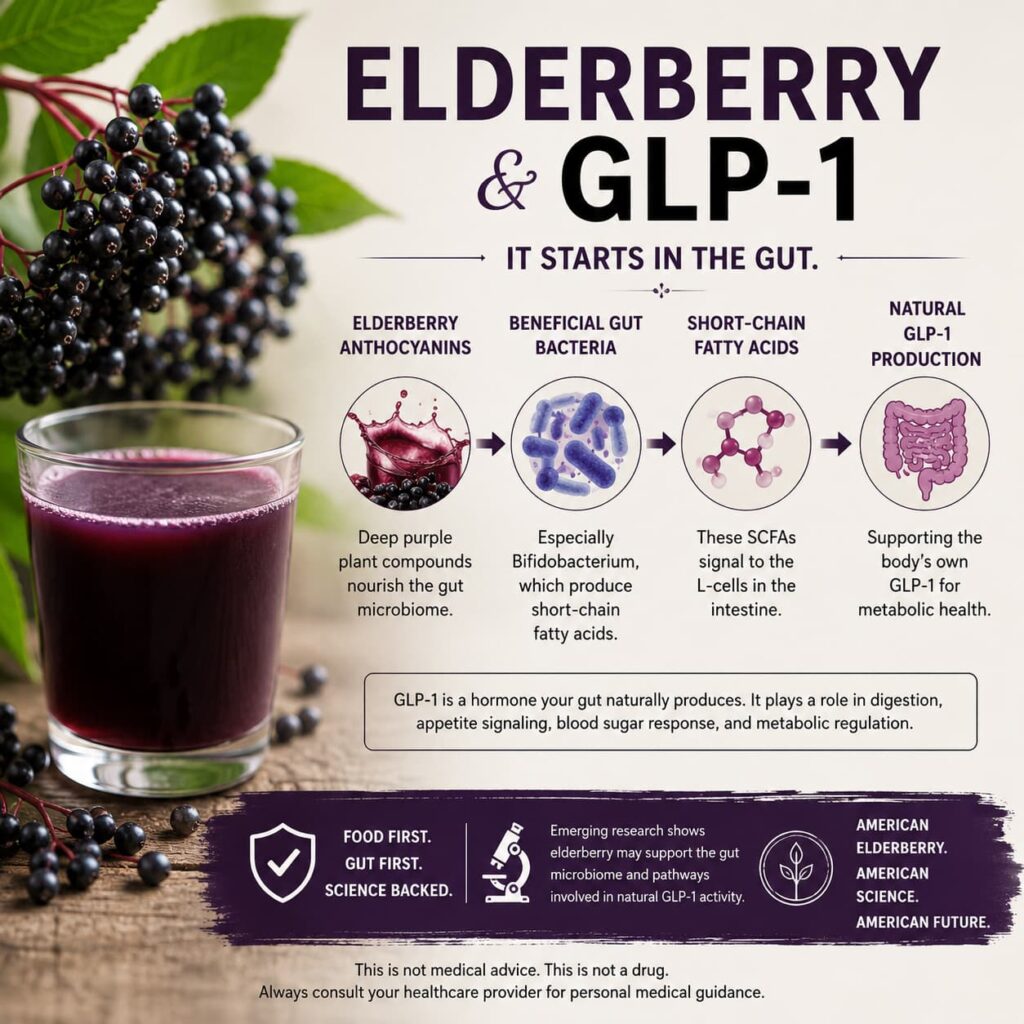
Elderberry’s anthocyanins are a heavy-duty workhorse. They are powerful antioxidants that reduce oxidative stress throughout the body. They even cross the blood-brain barrier to help reduce brain inflammation. I keep an 8-oz bottle in the fridge after I open it and take a teaspoon daily.

Several studies show taking elderberry at the first sign of illness is comparable to Tamiflu and Paxlovid the prescription antivirals for lessening the flu or covid. They help reduce the viral load and lessen the duration of the flu and COVID-19. Elderberry has shikimic acid in it which is the main ingredient in Tamiflu.

That’s why the travel bottle is perfect! It goes with you everywhere. It even gets through TSA and onto the plane so you don’t ruin your vacation. 

How often should I take Lion’s Mane?

Lion’s Mane mushroom is a tincture. You can take half of a dropper daily to help support brain connection, dendrite growth, and fight brain fog.

Do you have any products with both elderberry and Lion’s Mane?

I have a new product LIONBERRY BRAINIAC LEMONAIDE TONIC that is a nice and light refresher. It has Lion’s Mane, elderberry, elderflower, pea flower, a bit of citrus and honey. It’s delicious and great for brain health. It will be out next week. 

What makes your elderberry products different?

The difference between my products and the elderberry syrup you may see from other vendors is that I don’t cook and boil to reduce the elderberry to syrup. This is the traditional method. The big companies sell syrup and gummies but all the anthocyanins are degraded in the heat.

Why should I buy from Lionberry?

Buying local and regional helps us strengthen our food supply chains and avoid shipping disruptions. Invest in the land you live off of.

I’m a farmer. How do I help Lionberry?

We need 22,000 acres of elderberry planted to meet the U.S. needs currently sourced through Europe. If you have 3-9 acres available to plant, a hedge available, or want to learn how easy it is to join the Elderberry Farm Movement! Give Bevin a call at (913) 277-9458.

Facebook
X
LinkedIn

When Words Lose Their Meaning

Lionberry 's Weekly Delusion and Re-illusion Update.

The phrase “food is medicine” has become the wellness world’s version of “thoughts and prayers.” Everyone says it. Everyone feels good saying it. And almost nobody means anything real when they do. That’s the danger—not the phrase itself, but what happens when language gets stretched so far it stops pointing to anything true.

The original use of the phrase belonged to grandmas, gardeners, and people who still know how to cook and where food comes from. In that world, “food is medicine” meant something simple and grounded. A piece of meat and some vegetables—and fruit when it was in season—was just a regular meal. And then there were the special things you made when someone didn’t feel well: mixtures built from botanicals, herbs, fruits, nuts, grasses, roots, seeds, and whatever the land offered that season. Things pulled straight from soil and pantry because they carried function, flavor, and a purpose. That usage was peaceful, instinctive, and honest.

Then came the influencers, using the same phrase while holding something powdered, flavored, and algorithm-optimized. “Food is medicine” became a caption under a neon shake that tastes like peach sorbet and contains a clinically irrelevant amount of plant dust. They didn’t inherit the meaning—they inherited the hashtag. And hashtags don’t carry wisdom; they carry trend cycles.

Then comes the USDA, NIH, and hospital systems, who use both phrases—but in different ways. “Food Is Medicine” is their broad, public-facing concept, the umbrella idea that nutrition is foundational for health. “Food As Medicine”—capital As—is the technical term for the clinical, billing-coded interventions:

produce prescriptions,

medically tailored meals,

medically tailored groceries.

This version has insurance pathways, reimbursement logic, metrics, screenings, and outcome evaluations. It isn’t a belief system. It’s a healthcare program.

So we end up with two phrases—Food Is Medicine and Food As Medicine—that sound almost identical but function in totally different worlds. And both of them, at their best, once pointed to something we still have right now: real plants growing from real soil, carrying real chemistry that does real things in the human body. Not ancient in the sense of “long ago,” but ancient in the sense of continuity—still alive, still growing, still here.

Once a phrase becomes universal, though, it becomes meaningless.

That’s what’s happening now.

A wellness word printed on plastic.

“Natural” stamped on a bag of potato chips.

“Immune-supporting” slapped on anything that wants to look virtuous.

Marketing fog replacing actual meaning.

It’s Peacekeepers in 1984.

It’s “community” in Big Tech.

And on the Idiocracy side, it’s the fictional Electrolyte Drink Brawndo—marketed so aggressively that the entire population believes “it’s got what plants crave.”

In the film, they irrigate crops with the Electrolyte Drink Brawndo instead of water because advertising has replaced knowledge. Marketing departments tell us what truth is. The soil dies. The crops fail. The land collapses into a dust bowl. That’s what linguistic drift does: it hollows meaning until the absurd becomes normal.

“Food is medicine” used to mean:

eat real plants,

respect soil,

trust the chemistry that grows in the field,

trust the phytonutrients that come from this earth,

food keeps you alive and makes you whole.

Now it means turmeric dust on junk food.

Or a wellness word added so a product can sell for $3 more.

This hollowed-out category is not a comfortable place for real food to sit.

The old category, where LionBerry sits—the one before wellness gloss, before powdered fantasy, before language drift washed the meaning out of the words—still exists. But sitting there is not accidental. People tell me all the time to cheapen it, powder it, plastic-bottle it, isolate it, dilute it, lab-flavor it, margin-boost it, and make it “scalable” by stripping out the thing that makes it real.

I don’t do it.

Not because it’s easy.

But because sometimes the right thing to do is always the hardest thing to do.

LionBerry sits in the old category because I fight for it to sit there.

Real plants.

Real chemistry.

Real soil.

Real function.

Zero powdered fantasy.

LionBerry is exactly what it says it is: a farm-crafted drink made out of actual food.

When I say “the phrase doesn’t need to be fixed,” I mean the phrase “food is medicine.”

We don’t need to invent a new set of buzzwords or rescue the old ones from misuse.

We don’t need to rebuild or replace the language itself.

What needs to change is this:

start making products that mean what the words used to mean.

Start making food products that are just food