

Questions & Answers
A collection of Q&A sessions about Lionberry products, American elderberry, and Lion’s Mane mushroom.
Disclaimer: This video is for entertainment and educational purposes only. It is not medical advice, nor should it be treated as such. If you need medical advice, please consult a real, licensed professional who probably wears a stethoscope more often than I do.
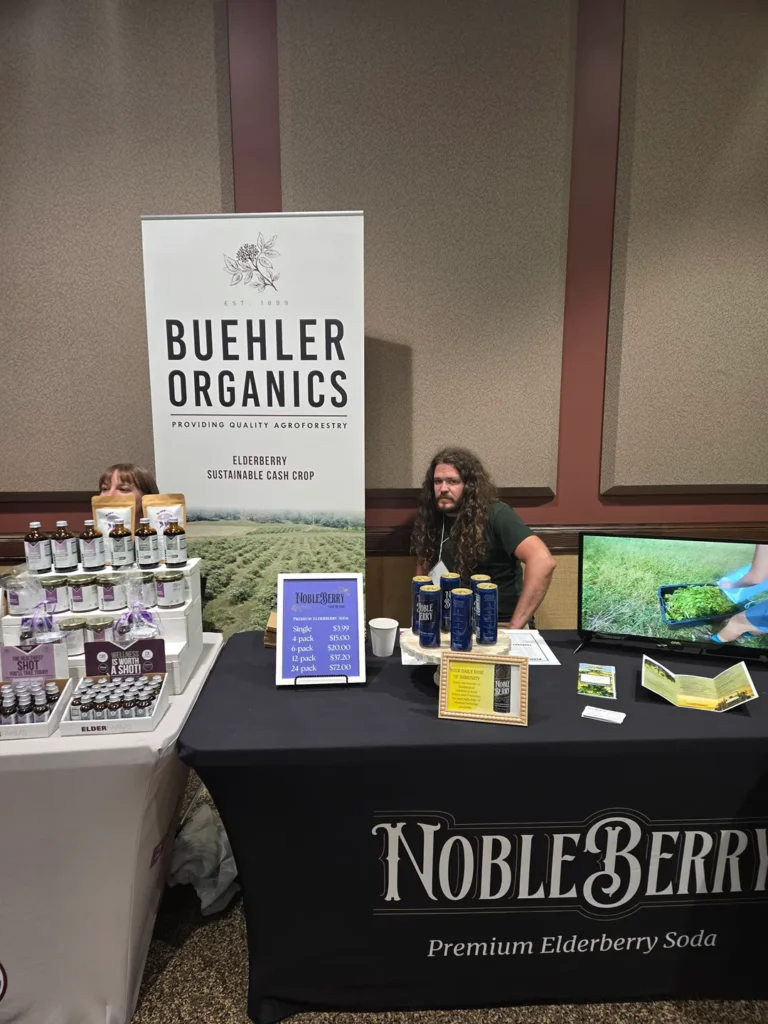
Also, for the record: this video was filmed on a very tall table. I do have big feet, but no — I am not a hobbit. Please don’t ask me about Second Breakfast.
Rather Read?
The Power of American Elderberry:
Local Roots, Global Impact
In this Q&A, the speaker explains the health benefits of elderberry, including compounds like protocatechuic acid, quercetin, and Omega-3s for brain health. They highlight the importance of American elderberry as a native Midwest crop, discuss cultivars grown in Kansas and Missouri, and stress the need for a strong local supply chain to replace reliance on European elderberry imports. Elderberry is presented not only as a health resource but also as a regenerative farming solution that supports soil health, biodiversity, carbon sequestration, and additional revenue for farmers.
Food as Medicine:
Elderberry, Lion’s Mane, and Soil Health
In this short Q&A, the speaker emphasizes that food functions as medicine, supporting the immune system, reducing inflammation, and improving gut health. Lion’s mane mushroom is highlighted for its role in regenerative nerve health, while elderberry is praised both for its health benefits and for its contribution to regenerative agriculture. Elderberry is described as valuable not only for human wellness but also for building healthier soil.
Lion’s Mane Extract:
Brain Health and Nerve Regeneration
In this Q&A, the speaker explains the powerful properties of Lion’s Mane mushroom extract. A double extraction process captures compounds from both the fruiting body and mycelium, providing precursors to nerve growth factor (NGF) and brain-derived neurotrophic factor (BDNF). These compounds support nerve regeneration and brain health, helping to counter the natural decline from aging, depression, or illness. While Lion’s Mane can be eaten fresh, concentrated tinctures make it easier to obtain therapeutic levels of phytonutrients. The extract is commonly added to coffee, tea, or smoothies, forming a key component of the Lionberry product alongside elderberry.
Getting Started with Elderberry:
Drinks or Concentrates
The speaker introduces ways to begin with elderberry products, depending on personality and preference. Some may prefer a daily teaspoon of concentrated elderberry, while others might try a four-pack of elderberry drinks. Both options are tasty, with flavors reminiscent of grape and tart cherry. The discussion emphasizes that food has always been medicine—supporting health and forming part of regenerative agriculture practices—reminding us that eating well is both a personal and ecological choice.
Why Take Elderberry?
Antioxidants and Inflammation Support
In this Q&A, the speaker explains why elderberry is such a popular health food. Elderberries contain exceptionally high levels of antioxidants, particularly anthocyanins—the compounds responsible for the deep purple color of many fruits. Ranking among the top fruits for anthocyanin content (second only to chokeberry), elderberry provides powerful support against inflammation. The antioxidants break down into beneficial metabolites such as protocatechuic acid, which further contribute to health benefits.
When Will I Notice Results from Lion’s Mane?
In this Q&A, the speaker explains that while Lion’s Mane is not medical advice but rather a functional food, many people report benefits within one to three weeks of regular use. Research suggests men may feel effects slightly faster than women. Taken daily, even in small amounts such as two milliliters, Lion’s Mane is being explored for supporting everything from senior cognitive decline to ADHD in younger generations. The speaker predicts that within a few years, Lion’s Mane will become a household staple—fortifying drinks much like calcium in orange juice or iodine in salt—making products like Lionberry a natural fit for everyday wellness.
Will Picky Kids Like the Taste of Elderberry?
In this Q&A, the speaker emphasizes that elderberry drinks were designed with picky kids—and adults—in mind. Thanks to flavors like Concord grape, tart cherry, honey, and lemon, the drinks taste more like natural sports beverages such as Pedialyte or Gatorade, rather than bitter or spicy herbal blends. While subtle undertones of elderberry and elderflower tea remain, the flavor profile is light, fruity, and appealing, making it enjoyable for even the fussiest palates.
Lion’s Mane Extract and Nerve Growth Support
In this Q&A, the speaker describes Lion’s Mane mushroom extract, a powerful double extraction made with both alcohol and water at Meyers Mushrooms in the Midwest. The tincture includes compounds from both the fruiting body and the mycelium, which stimulate nerve growth factor (NGF) and brain-derived neurotrophic factor (BDNF). These compounds act like “miracle grow” for nerve branches, supporting regeneration that naturally declines with age, depression, stroke, or other conditions. Research on Lion’s Mane is robust, confirming its role in promoting nerve health and cognitive support.
Building a Local Value Chain:
Kansas State Fair
In this Q&A, the speaker shares their excitement about showcasing products at the Kansas State Fair. They describe their “24-farm value chain,” which connects local producers including Meyers Mushrooms, Shoney Honey, Elder Farms, and Bueller Organics. This network supports juicing, elderberry extract, and other inputs, ensuring that money spent locally is reinvested in the community. The speaker emphasizes the multiplier effect of recirculating dollars through local farms and plans to invite collaborators and guest speakers to their booth to engage directly with the community.
Elderberry Products and Low-Sugar Options
In this Q&A, the speaker addresses whether their products are suitable for people following low-sugar or keto lifestyles. All products use local raw Shoney honey as a natural sweetener, with no added or processed sugars. While this means they are not calorie-free, they remain free of refined sugar. For those who want elderberry without honey, the speaker also offers a wholesale elderberry extract that contains no added sugar at all, providing an option for customers who prefer or require a sugar-free alternative.
Find Us at Festivals and the Kansas State Fair
In this Q&A, the speaker highlights where to find Lionberry products at local events. They share excitement about offering refreshing elderberry-based drinks at festivals, farmers’ markets, and the Kansas State Fair. Customers are encouraged to check the steelblue-meerkat-818915.hostingersite.com website for updates, stop by in person, and enjoy the drinks as a delicious recovery option—especially on hot days when paired with water.
How Much Lionberry Should I Drink?
In this Q&A, the speaker explains that drinking Lionberry is much like enjoying a food—it depends on your needs and preferences. While some people choose to drink a whole bottle at once, others may split it to be mindful of calories since it contains honey. Athletes and heavy laborers, like the speaker’s husband who is a welder, often drink the full bottle without hesitation. Ultimately, there’s nothing wrong with finishing the whole drink if you’re thirsty and want to enjoy it.