

One elderberry plant. One hunch.
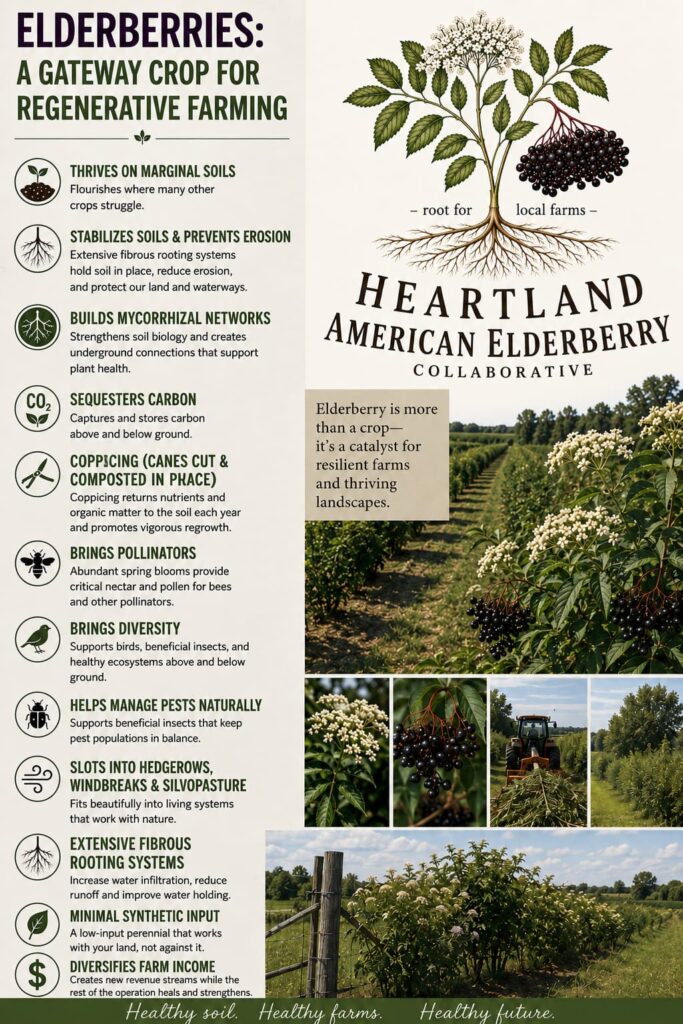
The hunch was that this plant… American elderberry (Sambucus canadensis, also classified by some authorities as Sambucus nigra subsp. canadensis)… was going to matter. Not just to my humble farm. Not just to my health. To my region. To the way we feed people. To the soil we leave behind.
I am a small elderberry grower in Spring Hill, Kansas. I am especially fascinated by the value-added side of agriculture and what happens when farmers can keep more of the value chain close to home.
For me, elderberry came in through the side door. I was using it on myself first.
I have brain tumors and something called mass effect. That is what happens when a tumor starts acting like a bully and pushing on nearby structures. In my case, it was creating inflammation around my hippocampus.
The elderberry helped. Not in a miraculous way. Not quickly. Over six or seven months I started noticing changes. I heard it before I understood it. My speech began clearing up. Words came easier. The fog seemed lighter.
Later, I had imaging through both KU and Mayo Clinic that showed a reduction in inflammation around my hippocampus.
Elderberry is rich in anthocyanins. One of the metabolites associated with those compounds is protocatechuic acid, which is capable of crossing the blood-brain barrier. A plant doing what plants have always done was my best explanation for what I was experiencing.
That changed what I was willing to do with my life.
That got my attention.
I wanted to know more. Not just how to grow it. How to grow it really well. How to process it without destroying what makes it worth growing. How to put it in front of more people without losing the thread that runs from soil to bottle to brain.
Ground to bottle to brain.
That became the question.
So I started driving. Not figuratively. Actually driving. Driving. Driving. Driving some more.
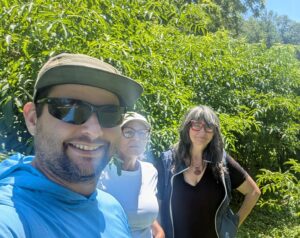
I started talking with Mickey Gallagher. Mickey is the Johnny Elderberry Seed of Kansas City. He has an ag degree, runs Farmyard KC, grows in high tunnels, and serves as caretaker of the American elderberry plantings at Casa Somerset for Michael Hursey. Mickey is that rare person who can pivot between irrigation, cultivars, grant paperwork, rocking his baby to sleep, and lunch plans all in the same conversation and never lose his place.
Lori Trojan was already there too. Wild Ivy Herb Farm. Master gardener. Master herbalist. Educator. Storyteller. And owner of one of the best laughs in the group. Lori learned this work the long way… through her mother, her grandmother, and the long quiet line of women who knew which plant did what before there was an internet to ask. The kind of knowledge you cannot get from Google because the people who held it never bothered to write it down.
And then there is Michael Hursey. Regional networker. Host. Champion of the small farmer. Michael has spent years pushing for vertical integration and finding ways for farmers to keep some of the value they create instead of handing it off three steps up the chain. Our earliest meetings happened at Casa Somerset.
That was the core.
Then I drove some more.
I took Michael Hursey to Elder Farms for a day of learning. I drove out to Lori’s farm, Wild Ivy Herb Farm, countless times. Lori and I visited Mark Allison and toured his elderberry winery. I toured wineries throughout Miami County and learned about agritourism through the network Mark helped build. I drove out to Cassandra at Wild Oaks in Missouri. I went down to Dave Buehler’s place in Mount Vernon as often as I could. I visited Jeremy Fyler at Fyler Farms in Missouri.
I go to as many conferences, seminars, farm groups, markets, workshops, and places where farmers can be found as I possibly can. I listen. I ask questions. I pay attention.
One of the things Mickey and I love most now is farm visits. That’s where we really get down in the dirt with people. With the farmers. With the growers. That’s where the real conversations happen.
At the same time, through my own elderberry business, I spend a lot of time in front of the public every week selling elderberry products, answering questions, and listening to what consumers actually care about.
I talked to farmers at farmers markets and dreamers at holiday boutiques and planners at home shows and people who had planted and people who wanted to plant and people who had never heard of elderberry and somehow ended up in a twenty-minute conversation with me anyway. Sorry to those people. Also you’re welcome.