METABOLIC RECOVERY

We’ve spent the last two years talking about GLP-1 drugs. No one is talking about what happens after.

The Metabolic Off-Ramp After GLP-1: Why the Post-Appetite Era Needs to Take a Food Systems Look at Elderberry

By 2030, an estimated 35% of American households — a staggering proportion for a single class of medications — will have someone on a GLP-1 receptor agonist.

This is no longer a niche population or a specialty intervention. It reflects a broad shift in how metabolic disease is being managed at scale in the United States, where rates of obesity and metabolic dysfunction remain among the highest in the world.

GLP-1 receptor agonists (including semaglutide and tirzepatide — marketed as Ozempic, Wegovy, Mounjaro, and Zepbound, with next-generation triple agonists such as retatrutide in development) are reshaping how the country thinks about weight, appetite, and metabolic health.

The pharmaceutical conversation is settled. These drugs work — and they work well.

It is a structural intervention in the biology of a nation—a direct shift in how the United States addresses its metabolic problem. What happens next?

What happens after appetite suppression?

GLP-1 medications cost roughly $1,000 a month. They require weekly injections.

And the clinical data on discontinuation tells a consistent story: when patients stop, the weight returns. The weight loss (metabolic gains) do not hold without ongoing support — and for some patients, that reality is deeply frustrating.

This is not a distant or theoretical concern. This is a question millions of Americans are about to have to ask.

If these drugs change the trajectory of weight and metabolism, what supports that trajectory once the prescription ends — or for those who never start?

That is the opening for a new food conversation around metabolic recovery.

A 2024 clinical trial out of Washington State University suggests there may be more to the food side of that question than previously assumed.

The Initial Study

Researchers at WSU’s Elson S. Floyd College of Medicine, led by Patrick Solverson, assistant professor of Nutrition and Exercise Physiology, published the results of a randomized, placebo-controlled crossover trial in the journal Nutrients [1].

It is exciting research — both because the question is timely and because the team chose to study a food-based metabolic pathway with unusual precision.

The initial study was funded by a $200,000 grant from the United States Department of Agriculture’s National Institute of Food and Agriculture [2].

The trial tested elderberry juice against a flavor- and sugar-matched placebo in 18 overweight adults over one week.

The results were more than notable.

Postprandial blood glucose — blood glucose after eating — decreased by 24%.

Fat oxidation increased 27% both at rest and during exercise, meaning the body was burning more fat for fuel.

Insulin levels trended lower by 9%, though this result did not reach statistical significance in the small cohort — the direction is consistent with the glucose and fat oxidation outcomes and warrants attention in future, larger trials.

Beneficial gut bacteria increased while harmful species declined, including increases in Bifidobacterium, a bacterial population that expands as a result of anthocyanin fermentation in the gut and contributes to the generation of short-chain fatty acids involved in signaling L-cells to release GLP-1.

The microbiome shifted toward a profile associated with improved metabolic health — in seven days [1].

For a one-week food intervention, those findings are striking. They suggest that elderberry may have relevance not only to blood sugar regulation, but to the broader question of metabolic recovery in the GLP-1 era — particularly for people who have discontinued these medications and need their biology to hold its ground.

The Mechanism

What makes the WSU findings particularly relevant to the GLP-1 conversation is not just the outcomes but the biological pathway they appear to engage.

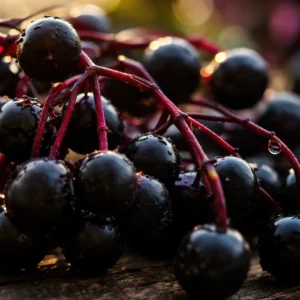
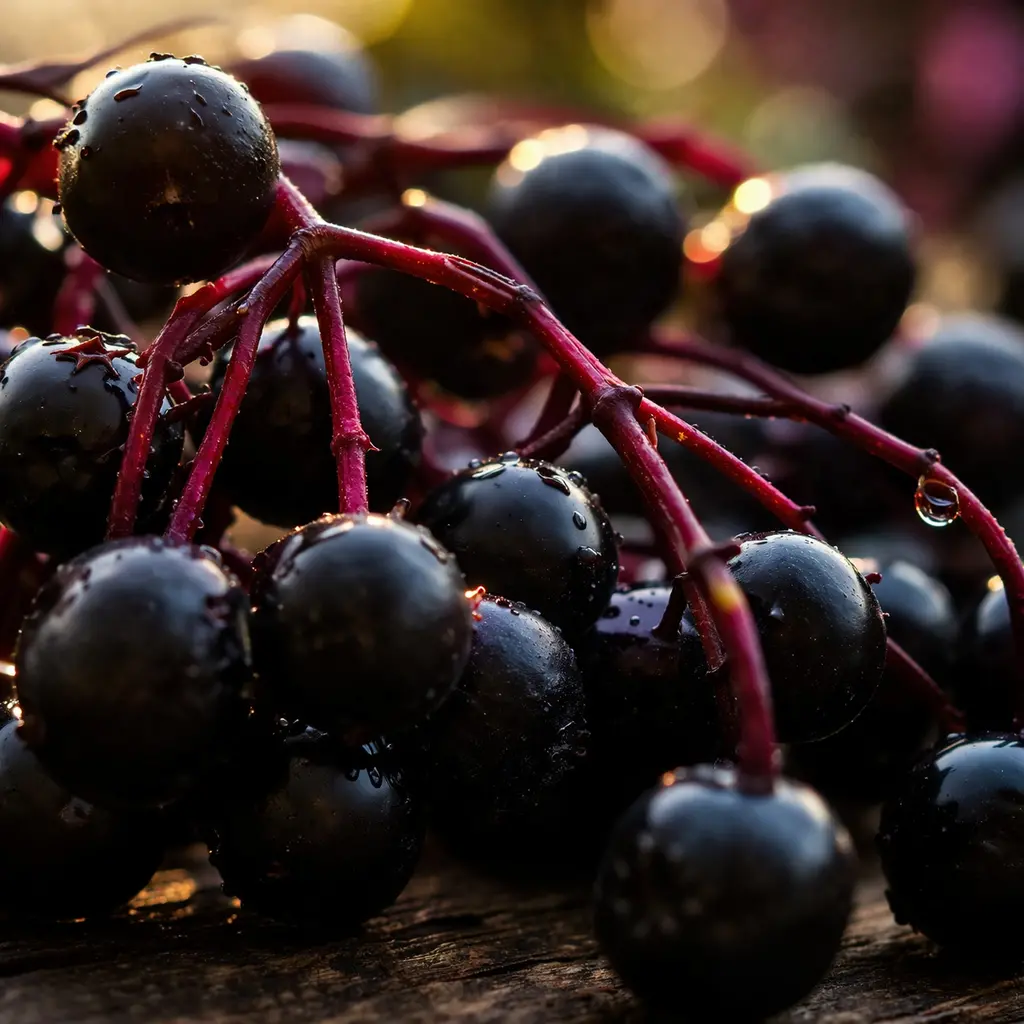
Elderberry is exceptionally dense in cyanidin-based anthocyanins — bioactive pigment compounds that function as prebiotic fuel in the gut.

When these anthocyanins reach the lower digestive tract, they are metabolized by gut microbes into bioactive compounds that support the growth of bacteria such as Bifidobacterium, which in turn drive the production of short-chain fatty acids (SCFAs) [1].

Those SCFAs — butyrate, propionate, and acetate — reduce inflammation in adipose tissue (body fat), which is a metabolically active tissue that can become chronically inflamed and contribute to insulin resistance.

By reducing this inflammation, SCFAs help improve insulin sensitivity and metabolic function, and they directly stimulate L-cells in the intestinal lining to secrete GLP-1 [3]. The same hormone that semaglutide was engineered to mimic.

The distinction is important. This is not a supplement making a structure-function claim. This is a food-based mechanism, documented in peer-reviewed literature, that supports the body’s endogenous GLP-1 production through the gut microbiome.

The functional interaction between gut microbiota and host metabolism is well established in the literature [4].

This is part of why elderberry may matter as more than an immune-support ingredient: it may have a role in food-based metabolic recovery.

 Something a person can incorporate daily — during or after a GLP-1 prescription — to support the pathway the drug was engaging.

The Processing Gap

Not all elderberry products are created equal.

The WSU results used elderberry juice. The active compounds — the anthocyanins driving the metabolic effects — are heat-sensitive.

Research on the thermal degradation kinetics of elderberry polyphenolic compounds has shown that heating at temperatures ranging from 212 to 302°F (100 to 150°C) causes significant structural changes in anthocyanins, degrading both the bioactive compounds and their antioxidant activity [5].

At 203°F (95°C), only 50% of elderberry pigments remained after three hours of heating [6].

Elderberry in particular, with its softer peel structure, has been shown to be more prone to anthocyanin degradation by heat than other berry fruits [7].

Most commercial elderberry products sold on grocery store and drugstore shelves — syrups, gummies, capsules — undergo extended high-heat processing from large-scale factory production. This is standard for food safety, cost efficiency, and volume, but it degrades a significant portion of the elderberry anthocyanins responsible for the prebiotic and metabolic recovery observed in the trial.

The Off-Ramp Opportunity

WSU is continuing this line of research. With an additional $600,000 in NIFA funding, Solverson’s team is now investigating whether elderberry can help patients maintain weight loss and metabolic stability after discontinuing GLP-1 medications [2].

These are the clinical results — and the follow-on research questions — that matter.

Three consumer segments are emerging in the GLP-1 era, all underserved:

Patients transitioning off GLP-1 drugs who need metabolic recovery to sustain their results.

Consumers who prefer a food-based approach and do not intend to start pharmaceutical intervention.

A broader population seeking daily metabolic recovery through diet rather than supplementation.

Elderberry, with a documented mechanism running through the gut microbiome to endogenous GLP-1 production, is the candidate worthy of serious attention.

Where Berberine Fits — and Where It Does Not

Berberine has earned its position in the metabolic health conversation. It is an isoquinoline alkaloid derived from plants including goldenseal (Hydrastis canadensis) and Oregon grape.

Its primary mechanism of action is activation of adenosine monophosphate-activated protein kinase (AMPK), a key regulator of cellular energy metabolism.

In animal models of insulin resistance, berberine has been shown to reduce body weight, improve glucose tolerance, lower plasma triglycerides, and improve insulin action [8]. Its effects on blood glucose are real.

However, berberine is a concentrated plant extract delivered in capsule form. The efficacious dose is not achievable through dietary intake, and its oral bioavailability is less than 1% [9].

It does not function as a prebiotic. It does not stimulate GLP-1 through the SCFA pathway. It operates outside the food system.

The framing of berberine as “nature’s Ozempic” was effective marketing, but it may have narrowed the conversation prematurely.

The more productive question is not which botanical extract mimics a pharmaceutical. It is which whole food or minimally processed ingredient supports the biological pathway the pharmaceutical was designed to target — through the gut, through the microbiome, through something a person can drink.

The Larger Picture

Elderberry is a great part of the answer. A USDA-funded clinical trial with statistically significant metabolic outcomes, a documented GLP-1 mechanism, and an active follow-on study on post-drug maintenance suggests it deserves a place in the conversation.

The research is there. The mechanism is specific. The consumer need is growing by the month.

For the millions of Americans who will step off a GLP-1 drug and need somewhere to land, elderberry may be the metabolic recovery off-ramp they have been waiting for.

Bevin Brooks 


References

[1] Solverson, P. et al. (2024). A One-Week Elderberry Juice Intervention Augments the Fecal Microbiota and Suggests Improvement in Glucose Tolerance and Fat Oxidation in a Randomized Controlled Trial. Nutrients, 16(20), 3555. DOI: 10.3390/nu16203555

[2] WSU Press Release (January 2025). Elderberry Juice Shows Benefits for Weight Management, Metabolic Health. Elson S. Floyd College of Medicine. https://news.wsu.edu/press-release/2025/01/08/elderberry-juice-shows-benefits-for-weight-management-metabolic-health/

[3] Tolhurst, G. et al. (2012). Short-Chain Fatty Acids Stimulate Glucagon-Like Peptide-1 Secretion via the G-Protein-Coupled Receptor FFAR2. Diabetes, 61(2), 364–371. DOI: 10.2337/db11-1019

[4] Tremaroli, V. & Bäckhed, F. (2012). Functional interactions between the gut microbiota and host metabolism. Nature, 489, 242–249. DOI: 10.1038/nature11552

[5] Oancea, A.M. et al. (2018). The kinetics of thermal degradation of polyphenolic compounds from elderberry (Sambucus nigra L.) extract. Journal of Food Science and Technology, 55(2), 1–11. DOI: 10.1177/1082013218756139

[6] Sadilova, E. et al. (2007). Thermal degradation of anthocyanins and its impact on color and in vitro antioxidant capacity. Molecular Nutrition & Food Research, 51(12), 1461–1471. DOI: 10.1002/mnfr.200700179

[7] Fernandes, A. et al. (2021). Anthocyanin content in raspberry and elderberry: The impact of cooking and recipe composition. Journal of Food Composition and Analysis, 96, 103709. DOI: 10.1016/j.jfca.2020.103709

[8] Lee, Y.S. et al. (2006). Berberine, a Natural Plant Product, Activates AMP-Activated Protein Kinase With Beneficial Metabolic Effects in Diabetic and Insulin-Resistant States. Diabetes, 55(8), 2256–2264. DOI: 10.2337/db06-0006

[9] Wang, D.S. et al. (2022). Referenced in: Natural products targeting AMPK signaling pathway therapy, diabetes mellitus and its complications. Frontiers in Pharmacology, 16, 1534634. DOI: 10.3389/fphar.2025.1534634

Facebook
X
LinkedIn

Elderberry’s Reputation Problem Doing It Right So It Actually Works

Lionberry 's Weekly Delusion and Re-illusion Update.

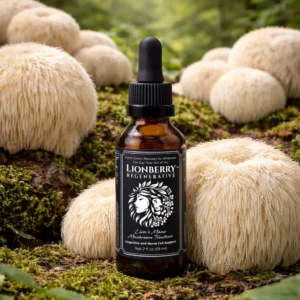
We make two products with elderberry: LionBerry Regenerative Hydration and Elderberry Sips. Neither one is a syrup.

Syrup is fine for pancakes. Thicker is not better.

For elderberry — as food, as medicine, for maximum benefit — drop the pH, pasteurize fast, protect plant properties, no powders.

Long, slow steeping in heat — like simmering elderberry with spices for hours — is not better. Powder is fine for powdered sugar, powdered snow, and baby powder — but not elderberry. There is no place for powder in food. Dehydrating and powdering food changes cell structure, uses too much heat, and burns off delicate plant properties.

We never use dehydrated powder. Most powdered elderberry comes from overseas. About 95% of drugstore elderberry products rely on powdered European elderberry.

We use the native American elderberry — Sambucus canadensis, fresh-pressed. American elderberry contains dramatically higher levels of anthocyanins — the purple antioxidants — roughly 10× the antioxidant activity of blueberries, for perspective. It’s beyond a superfruit. It also has antiviral activity and supports gut health and immune modulation.

LionBerry Regenerative Hydration is more than a sports drink. It’s a recovery drink — for after you got your butt kicked, or for whatever it is that life did to you.

It’s strange what we give athletes and kids: sports drinks and energy drinks loaded with artificial colors, sweeteners, powdered isolates, and caffeine. LionBerry is the opposite. Not an energy drink. No isolates. No powders. Whole plants, intact, grown out of the ground by farmers.

Plants work through synergy. Their compounds evolved to function together. Isolating one molecule misses the point.

For LionBerry Regenerative Hydration, we start with a clear, light base of elderflower tea — easily drinkable — and add it to our elderberry. The anthocyanins in elderberry are delicate. Long heat destroys them. Repeated freezing and thawing destroys them. Powdering destroys them.

Mass spectrometry consistently shows that whole-food preparations retain broader nutritional complexity than powders or isolates. Dehydration and reduction require too much heat — the plant properties burn off.

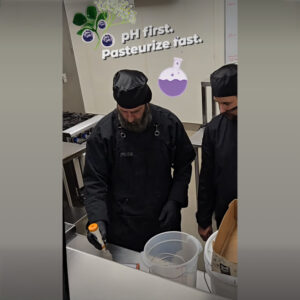
We engineer pH first — not reduction, not boiling, not cooking it down into a syrup.

Elderberry starts around pH 5.1. That’s too high for safe bottling.

People brag about odd things. I have heard competitors advertise that they never add water to their elderberry syrup. Good. I should hope not.

Making an elderberry syrup is about as medicinal as making pancake syrup. Making syrup is traditionally done by cooking elderberry down with honey and spices. That’s worse than adding water. The plant properties are all gone.

To preserve plant properties, you need to drop the pH to prevent botulism, preserve anthocyanins, and proceed with a hot fill, hold, and then hermetically seal — without boiling the plant into oblivion.

We don’t make syrup.

Our second product is Elderberry Sips — that’s the name. Capital E. Capital S. Plural.

Elderberry Sips uses fresh-pressed elderberry — never powder, never concentrate. We add Concord grape ( RESERVITOL-heart support) and tart cherry (melatonin & magnesium). Together they naturally drop the pH to ~3.7, allowing fast pasteurization without heat that causes degradation of purple elderberry anthocyanins The lower pH protects the delicate plant properties. Elderberry Sips is ~15% tart cherry and Concord Grape added to fresh pressed American Elderberry — without gallons of honey and without turning it into a syrup sugar bomb.

A syrup is defined as ~60% solids. To get there, you must boil and reduce. That process destroys anthocyanins.

Cinnamon is great — but it needs long, hot steeping. Elderberry needs fast, controlled heat. They are biologically opposite processes.

And yes, we use glass. We hate hauling it. We are beasts of burden. It’s heavy. It breaks. It’s fragile. It’s expensive to ship. Less-than-truckload shipping is brutal. There are glass tariffs.

But plastic leaches. Aluminum has plastic liners. And healthy bodies deserve better.

We don’t water down syrup. We don’t confuse chemistry with marketing.

We don’t want anyone out of business. We want elderberry done right.

When elderberry “doesn’t work,” it’s usually not the plant’s fault — it’s been overheated in dehydration, over-reduced in making a syrup, powdered and shipped from overseas, repeatedly frozen and thawed, or cooked into oblivion.

Quality matters. Results matter. Temperature, water activity, and pH matter.

We want elderberry’s reputation to be higher. We want better results. We want people impressed because it actually works.

Do elderberry right.