When Words Lose Their Meaning

The phrase “food is medicine” has become the wellness world’s version of “thoughts and prayers.” Everyone says it. Everyone feels good saying it. And almost nobody means anything real when they do. That’s the danger—not the phrase itself, but what happens when language gets stretched so far it stops pointing to anything true.

The original use of the phrase belonged to grandmas, gardeners, and people who still know how to cook and where food comes from. In that world, “food is medicine” meant something simple and grounded. A piece of meat and some vegetables—and fruit when it was in season—was just a regular meal. And then there were the special things you made when someone didn’t feel well: mixtures built from botanicals, herbs, fruits, nuts, grasses, roots, seeds, and whatever the land offered that season. Things pulled straight from soil and pantry because they carried function, flavor, and a purpose. That usage was peaceful, instinctive, and honest.

Then came the influencers, using the same phrase while holding something powdered, flavored, and algorithm-optimized. “Food is medicine” became a caption under a neon shake that tastes like peach sorbet and contains a clinically irrelevant amount of plant dust. They didn’t inherit the meaning—they inherited the hashtag. And hashtags don’t carry wisdom; they carry trend cycles.

Then comes the USDA, NIH, and hospital systems, who use both phrases—but in different ways. “Food Is Medicine” is their broad, public-facing concept, the umbrella idea that nutrition is foundational for health. “Food As Medicine”—capital As—is the technical term for the clinical, billing-coded interventions:

produce prescriptions,

medically tailored meals,

medically tailored groceries.

This version has insurance pathways, reimbursement logic, metrics, screenings, and outcome evaluations. It isn’t a belief system. It’s a healthcare program.

So we end up with two phrases—Food Is Medicine and Food As Medicine—that sound almost identical but function in totally different worlds. And both of them, at their best, once pointed to something we still have right now: real plants growing from real soil, carrying real chemistry that does real things in the human body. Not ancient in the sense of “long ago,” but ancient in the sense of continuity—still alive, still growing, still here.

Once a phrase becomes universal, though, it becomes meaningless.

That’s what’s happening now.

A wellness word printed on plastic.

“Natural” stamped on a bag of potato chips.

“Immune-supporting” slapped on anything that wants to look virtuous.

Marketing fog replacing actual meaning.

It’s Peacekeepers in 1984.

It’s “community” in Big Tech.

And on the Idiocracy side, it’s the fictional Electrolyte Drink Brawndo—marketed so aggressively that the entire population believes “it’s got what plants crave.”

In the film, they irrigate crops with the Electrolyte Drink Brawndo instead of water because advertising has replaced knowledge. Marketing departments tell us what truth is. The soil dies. The crops fail. The land collapses into a dust bowl. That’s what linguistic drift does: it hollows meaning until the absurd becomes normal.

“Food is medicine” used to mean:

eat real plants,

respect soil,

trust the chemistry that grows in the field,

trust the phytonutrients that come from this earth,

food keeps you alive and makes you whole.

Now it means turmeric dust on junk food.

Or a wellness word added so a product can sell for $3 more.

This hollowed-out category is not a comfortable place for real food to sit.

The old category, where LionBerry sits—the one before wellness gloss, before powdered fantasy, before language drift washed the meaning out of the words—still exists. But sitting there is not accidental. People tell me all the time to cheapen it, powder it, plastic-bottle it, isolate it, dilute it, lab-flavor it, margin-boost it, and make it “scalable” by stripping out the thing that makes it real.

I don’t do it.

Not because it’s easy.

But because sometimes the right thing to do is always the hardest thing to do.

LionBerry sits in the old category because I fight for it to sit there.

Real plants.

Real chemistry.

Real soil.

Real function.

Zero powdered fantasy.

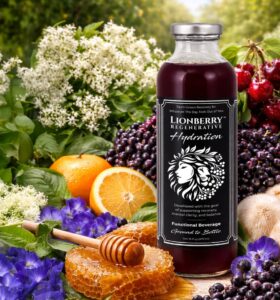
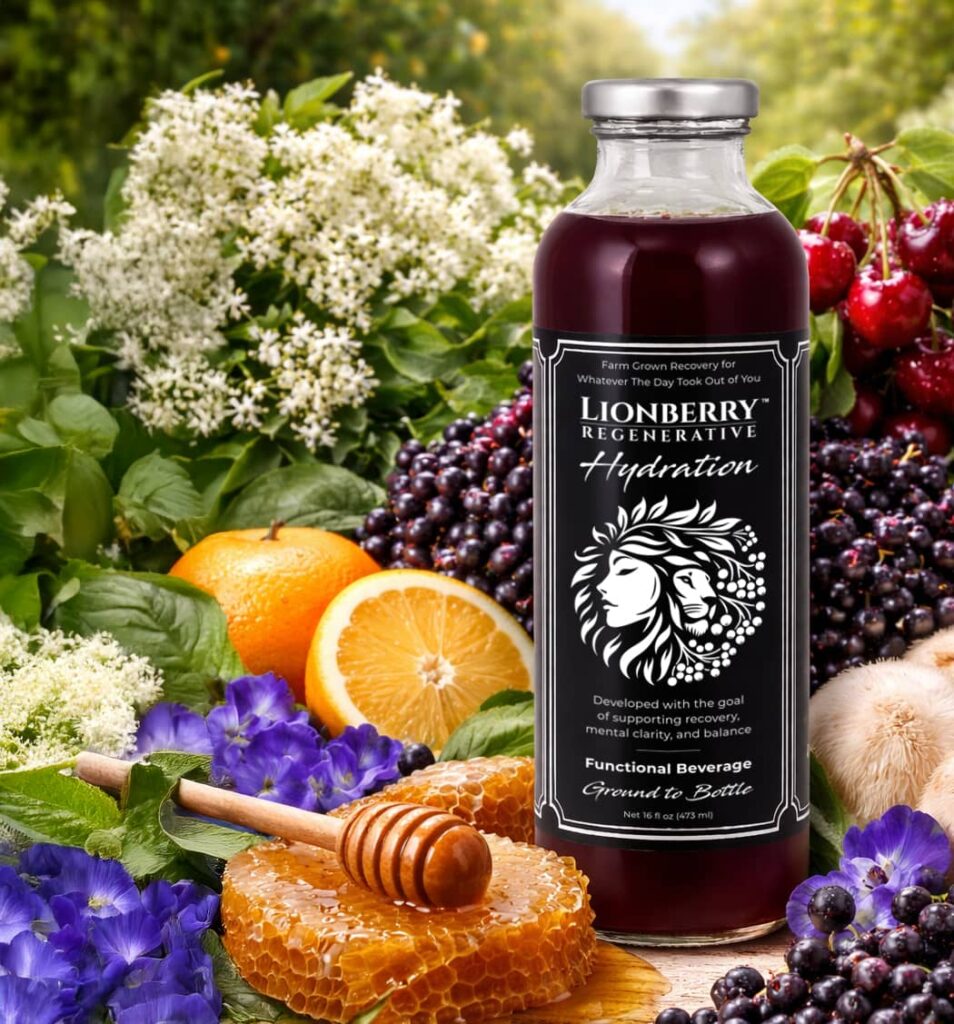
LionBerry is exactly what it says it is: a farm-crafted drink made out of actual food.

When I say “the phrase doesn’t need to be fixed,” I mean the phrase “food is medicine.”

We don’t need to invent a new set of buzzwords or rescue the old ones from misuse.

We don’t need to rebuild or replace the language itself.

What needs to change is this:

start making products that mean what the words used to mean.

Start making food products that are just food

Facebook
X
LinkedIn

BUSINESS SECRETS WEEKLY

Lionberry 's Weekly Delusion and Re-illusion Update.

Lionberry’s Weekly Delusion and Re-Illusion Update

THE BOTTOM LINE — FOR THOSE WHO DON’T READ THE WHOLE THING:

You did not gain this weight on purpose. And you are not lazy. Your biology is working against you and the pharmaceutical industry figured that out before your doctor did.

Maybe you are on Ozempic. Maybe you are on Wegovy or Rybelsus — same drug, semaglutide, different name on the box. Maybe you switched to tirzepatide — Mounjaro for diabetes, Zepbound for weight loss — because it works better and your doctor said so and they are right, it does. Maybe you are watching retatrutide come through clinical trials right now, the triple agonist hitting GLP-1, GIP, and glucagon all at once, and you are waiting for it because nothing has been enough yet.

Or maybe you went off one of these drugs and the weight came back and you are furious. Or you never wanted a needle in the first place. Or you are watching the bill every month and doing math you do not like.

Or you are just tired. Tired of the afternoon crash. The brain fog. The blood sugar swings. The feeling that your body is running against you no matter what you do.

You are not alone. And you are not out of options.

There is a berry that has been growing in the dirt of the American Midwest for centuries. Farmers knew it. Grandmothers knew it. Scientists are now catching up. Washington State University published a clinical trial showing that elderberry juice — real juice, not a capsule, not a powder, not a gummy — reduced blood glucose by 24%, dropped insulin levels by 9%, and increased fat oxidation by 27%. In one week.

The mechanism supports your body’s own GLP-1 response — the same hormone every drug on that list was designed to mimic. Not because someone engineered elderberry to do that. Because that is what the plant does.

The prebiotic power of elderberry is not new information. It has been known — in farming communities, in food science, in microbiome research — for years. Then the peer-reviewed, statistically significant, USDA-funded clinical trial came out of Washington State University and made it official. The internet, in its infinite wisdom, kept scrolling past a peer-reviewed USDA-funded clinical trial to watch someone unbox supplements on TikTok.

What the category still does not have is a functional beverage actually built around this science — fresh-pressed, farm-grown, anthocyanins intact. Not a supplement. A drink.

The research never went away. The conversation is just finally catching up.

Berberine is getting the “nature’s Ozempic” headline. Berberine is in a capsule. Elderberry is a fresh-pressed fruit with intact anthocyanins — grown in the dirt of the American Midwest — and nobody is talking about it.

That last part matters. A lot. We’ll get there.


The GLP-1 Conversation Got Hijacked. Twice.

First, pharmaceuticals hijacked it. Semaglutide showed up, the world lost its mind, and suddenly every conversation about metabolic health ran through a needle.

Then berberine hijacked it. “Nature’s Ozempic,” they called it. Fair enough — berberine has real research behind it and genuine metabolic effects. But berberine comes in a capsule. It is an extracted, concentrated supplement. It is not food. It is not a drink. It is not something you pour into your day.

Elderberry has not been sitting quietly. The science has been building for years. The mainstream conversation just has not caught up yet.

That is starting to change.


1. WHAT THE STUDY ACTUALLY FOUND

In January 2025, researchers at Washington State University’s Elson S. Floyd College of Medicine published the results of a randomized, placebo-controlled crossover trial in the journal Nutrients. Lead researcher Patrick Solverson, assistant professor of Nutrition and Exercise Physiology at WSU, designed the trial specifically to test 100% elderberry juice against a flavor and sugar-matched placebo — meaning participants couldn’t tell which one they were drinking, and the sugar content was controlled so the results couldn’t be explained away by sweetness alone.

Eighteen overweight adults. One week of elderberry juice. Here is what happened:

Blood glucose dropped 24%. After a high-carbohydrate meal challenge, participants who had been drinking elderberry juice processed sugar significantly better than when they drank the placebo. Not a little better. 24% better.

Insulin levels dropped 9%. Lower insulin means the body is managing glucose more efficiently. Insulin reduction precedes fat loss. This is not a trivial number.

Fat oxidation increased 27%. Participants burned more fat — both at rest and during exercise — when consuming elderberry juice. The body shifted toward burning fat as a fuel source instead of storing it.

Gut bacteria changed meaningfully. Beneficial bacterial species increased. Harmful ones decreased. The microbiome shifted toward a profile associated with better metabolic health in one week.

Solverson’s own words: “Elderberry is an underappreciated berry, commercially and nutritionally. We’re now starting to recognize its value for human health, and the results are very exciting.”

That is a researcher who has spent years on this data saying out loud that elderberry has been underestimated.

He is correct.


2. THE MECHANISM — WHY THIS IS NOT A COINCIDENCE

This is the part the headlines skip. They print the numbers and move on. The numbers are impressive, but the mechanism is the story.

Here is what is actually happening inside your body when you drink elderberry juice with intact anthocyanins:

Elderberry is extraordinarily dense in a specific class of compounds called cyanidin-based anthocyanins. These are the deep purple pigments that give the berry its color. They are bioactive. They are not decoration.

When those anthocyanins reach your gut, they become prebiotic fuel. They feed specific strains of beneficial bacteria — including Bifidobacterium and Akkermansia — that produce short-chain fatty acids as a byproduct of fermentation.

Those short-chain fatty acids — butyrate, propionate, acetate — do several things. They reduce inflammation in fat tissue. They improve insulin sensitivity. And critically: they directly stimulate L-cells in the lining of your gut to secrete GLP-1.

GLP-1. Glucagon-like peptide-1. The hormone semaglutide was engineered to mimic.

Your gut makes it naturally. Elderberry anthocyanins tell it to make more.

This is not a supplement claim. This is documented biochemistry published in a peer-reviewed journal funded by the United States Department of Agriculture.

The plant supports your body’s natural GLP-1 response. From the inside out. Through the microbiome. Through food.


3. THE PROCESSING PROBLEM NOBODY TALKS ABOUT

Here is where most elderberry products fail — and why the science in this study does not automatically apply to everything with “elderberry” on the label.

The anthocyanins are the active compounds. They are what drives the GLP-1 mechanism. They are what produced the 24% blood glucose reduction in the WSU trial.

Anthocyanins are heat-sensitive.

Most elderberry products on the market — syrups, gummies, capsules, powders — are processed at high heat for extended periods. It is cheaper. It is faster. It kills pathogens. It also destroys a significant portion of the anthocyanins in the process. You are left with a product that tastes like elderberry, looks like elderberry, and has almost none of the bioactive compounds that make elderberry worth anything metabolically.

The elderberry category has an overcooked problem. The plant gets blamed for the processing failure. People try elderberry syrup, feel nothing metabolic, and write off the whole category.

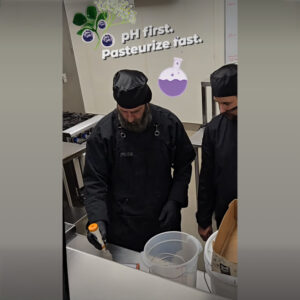
The fix is not complicated. Fresh-pressed elderberry with pH dropped immediately using tart cherry — not heat, not extended cooking — and processed at 164°F for 45 seconds. Enough to be safe. Not enough to torch the anthocyanins. That is the standard any elderberry product making metabolic claims should be held to.

What was in the WSU study was juice. Not a powder. Not a gummy. Not a capsule. Not a syrup. Fresh-pressed juice with the compounds intact — because that is the only form that produced these results.


4. THE GLP-1 OFF-RAMP — METABOLIC SUPPORT IN THE POST-APPETITE ERA

WSU is not done with this research.

With additional funding from the USDA’s National Institute of Food and Agriculture, the research team is now exploring a specific follow-on question: can elderberry help people maintain weight loss and metabolic stability after discontinuing GLP-1 medications?

This is the question millions of people are about to need answered.

GLP-1 drugs work. They also cost $1,000 a month, require a weekly injection, and when people stop taking them — the weight comes back. The metabolic reset doesn’t hold without support. The gut microbiome that was doing work under the drug needs something to keep feeding it.

Elderberry’s anthocyanins feed the bacteria that produce the SCFAs that trigger endogenous GLP-1 production. That is a natural, food-based mechanism for supporting the same pathway the drug was doing pharmacologically.

This is the white space in the GLP-1 conversation right now. Three audiences, all underserved: people coming off GLP-1 medications who need metabolic support to maintain their results. People who do not want to start them and are looking for a food-based path. And people who simply want daily metabolic support — something that feeds the biology instead of overriding it.

That is the post-appetite economy. And food brands that understand it are going to matter.


5. WHY BERBERINE IS NOT THE ANSWER TO THIS QUESTION

Berberine deserves its moment. It has real research. It works through a different mechanism — AMPK activation — and has genuine effects on blood sugar and metabolism.

But berberine is not food. It is a concentrated plant extract in a capsule because the dose required for efficacy is not achievable through diet. It does not feed your gut microbiome. It does not stimulate GLP-1 through the SCFA pathway. It works around the food system, not through it.

The “nature’s Ozempic” framing was always the wrong lens. The question is not which plant mimics a drug. The question is which food supports the biology the drug was designed to target.

Elderberry’s GLP-1 effect is mechanistically specific. It runs through the microbiome. It is amplified by the prebiotic fiber in the berry. It works the way food is supposed to work — by feeding the systems your body already has.

That is a different category. That is a better story. And it has been sitting in a peer-reviewed journal for over a year waiting for someone to tell it.


THE BOTTOM LINE — ONE MORE TIME

Elderberry has a randomized controlled trial showing 24% blood glucose reduction, 9% insulin drop, and 27% fat oxidation increase in one week. The mechanism supports the body’s natural GLP-1 response via gut microbiome stimulation. The research is funded by the USDA. The lead researcher at WSU is now studying whether elderberry can support people coming off GLP-1 medications.

The post-appetite economy is here. By 2030, 35% of American households will have someone on a GLP-1 drug. What happens alongside those drugs — and after them — is the conversation the food industry has not had yet.

Elderberry just handed it a place to start.


RESEARCH CITATIONS

Because we didn’t make this up.

[1] Solverson et al. (2024). A One-Week Elderberry Juice Intervention Augments the Fecal Microbiota and Suggests Improvement in Glucose Tolerance and Fat Oxidation in a Randomized Controlled Trial. Nutrients, Vol. 16, No. 20, Article 3555. DOI: 10.3390/nu16203555. https://www.mdpi.com/2072-6643/16/20/3555

[2] WSU Press Release (January 2025). Elderberry Juice Shows Benefits for Weight Management, Metabolic Health. Elson S. Floyd College of Medicine. https://medicine.wsu.edu/news/2025/01/09/elderberry-juice-benefits/

[3] Tremaroli V, Bäckhed F. (2012). Functional interactions between the gut microbiota and host metabolism. Nature, 489, 242–249. DOI: 10.1038/nature11552

[4] Tolhurst G et al. (2012). Short-Chain Fatty Acids Stimulate Glucagon-Like Peptide-1 Secretion via the G-Protein–Coupled Receptor FFAR2. Diabetes, 61(2), 364–371. DOI: 10.2337/db11-1019


LionBerry Regenerative

Facebook & Instagram: @lionberry

Business Secrets Weekly drops every Sunday at www.lionberry.us