

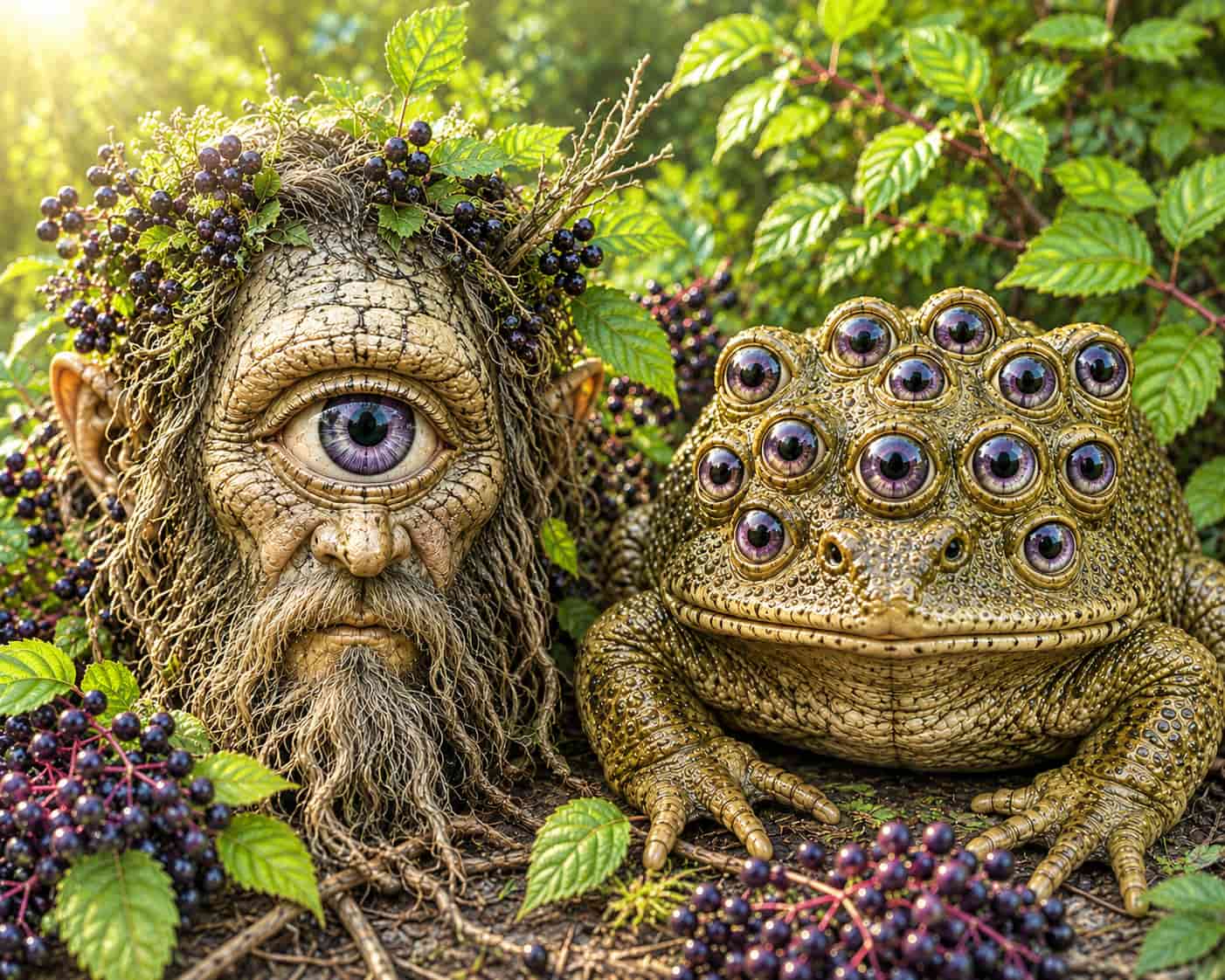
How the Twelve-Eyed Toad Sees What One Eye Cannot
A working treatise by Bevin Brooks
The Cyclops had one eye. One eye sees flat… no depth, no distance, no second opinion. And that’s every one of us if we’re honest. Every founder, every farmer alone with the thing they know, looking from the one spot they happen to stand on, falling in love with what they see and calling it truth. The oldest mistake isn’t being dumb. It’s being singular.
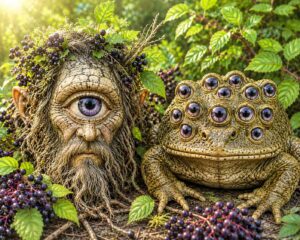
The fix isn’t getting smarter. A smarter Cyclops still has one eye. The fix is more eyes… set around the same thing, each catching what the others can’t. That’s the Twelve-Eyed Toad.
This is the oldest fight in philosophy, the One versus the Many. A hundred years ago William James planted his flag with the Many. He said the world isn’t a uni-verse, it’s a multi-verse… many real centers bumping into each other, the unity always partial, never sealed. He called the monist’s tidy world the block-universe. That’s the Cyclops exactly. One view, declared whole.
The Cyclops has a name out here in the dirt, and the name is consolidation. Big Ag is the one-eyed giant… one crop fence to fence, one buyer at the gate. Monoculture is just monism with a tractor on it. Take this price or take nothing. The farmer who grew the thing ends up the lowest-paid link in somebody else’s chain, picked off one at a time because every farmer’s standing there alone.
The answer isn’t one bigger farmer. A bigger Cyclops is still a Cyclops. The answer is a bunch of small farms that see together… growers and processors set around the same crop, each bringing the eye the others don’t have. That’s an AgriCluster. The Toad made out of real farms. It flips vertical integration on its head… integration by the farmers, not the giant. The money runs the other way. Down. Into the field, into the little town.
This is why the little emerging crops matter, and why the clock’s running. Elderberry, pawpaw, aronia, hazelnut… the ones the giant hasn’t flattened yet… still many growers, many ways, no single buyer owning the gate. The whole fight is to shape these crops on our terms before consolidation rolls in.
One thing keeps it honest. The Toad makes the questions… but reality casts the deciding vote. A bench of brilliant people can still be confidently wrong together. The eyes tell you what to go check. The numbers and the market tell you the answer.
So here’s the whole of it, and it’s a fight, not a meditation. Refuse the single view. Refuse the single buyer. Refuse the block-market. Build the bench. Build the cluster. Keep the crop plural, keep it farmer-held, keep the value down in the field that grew it.
The Cyclops is big. But it’s got one eye. We’ve got many. That’s how the small farm wins.