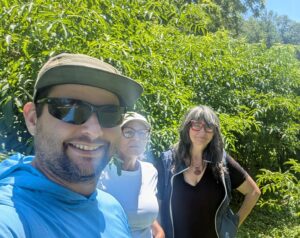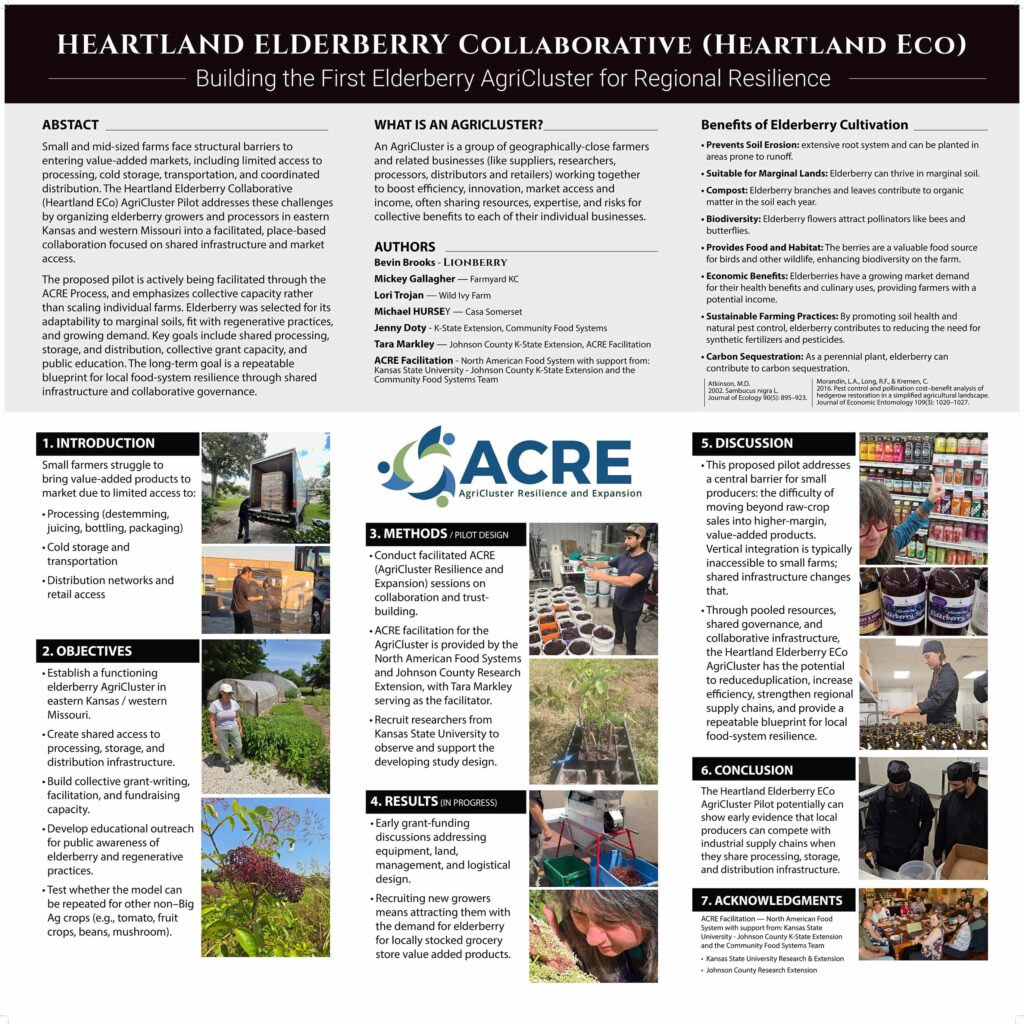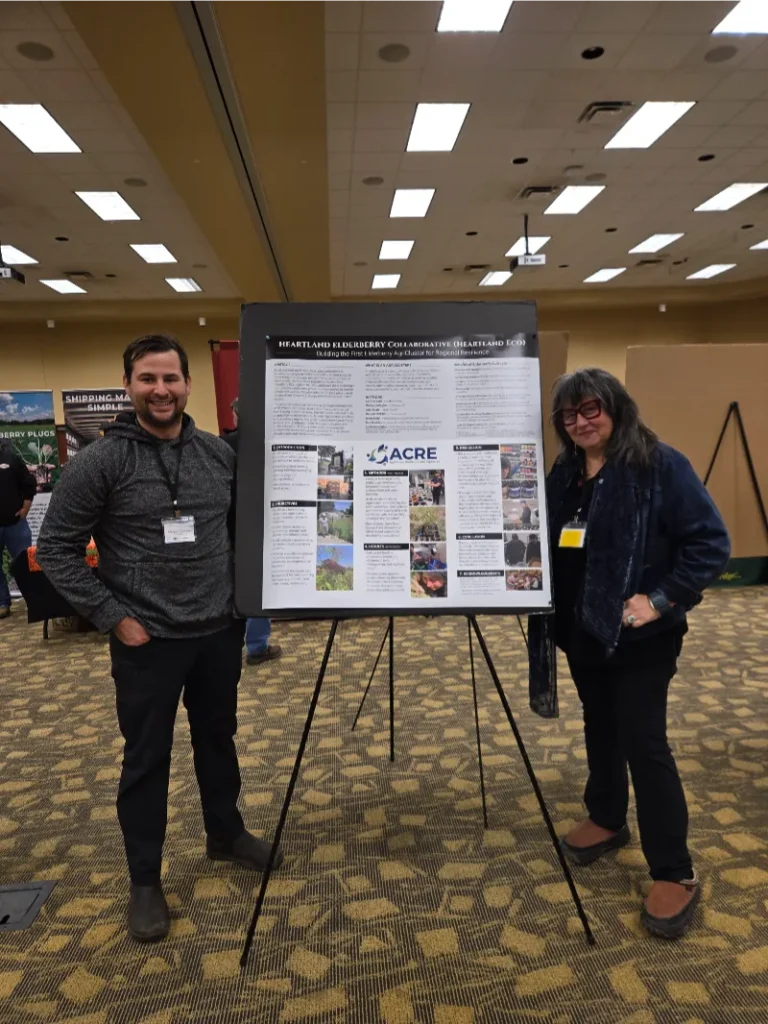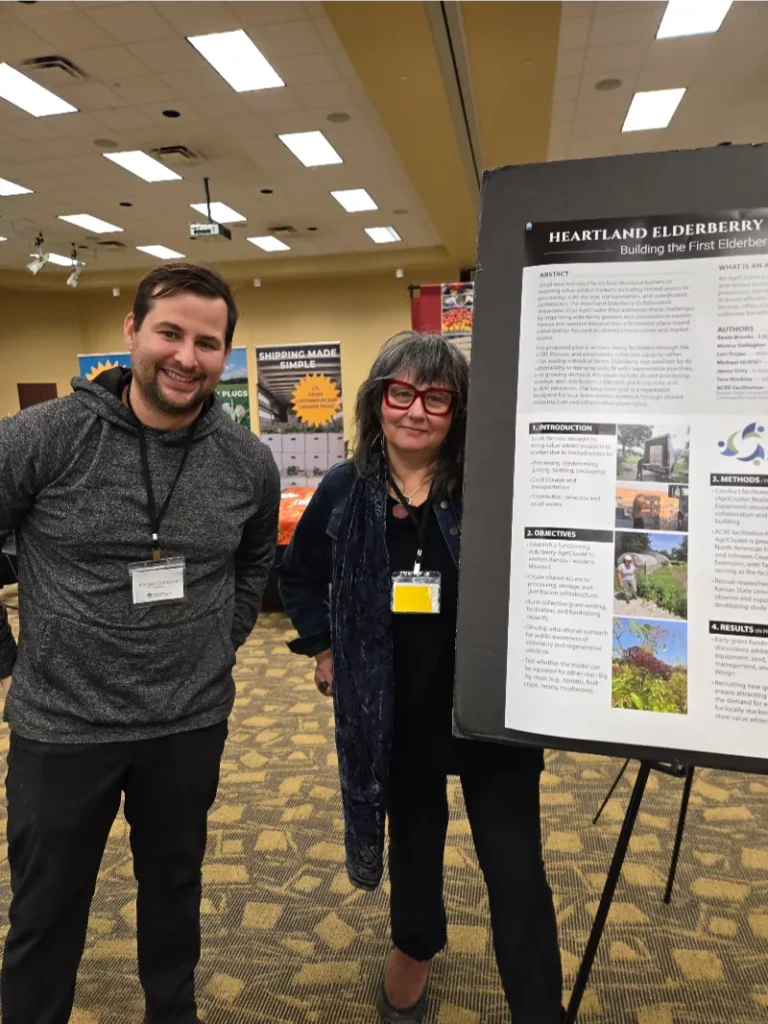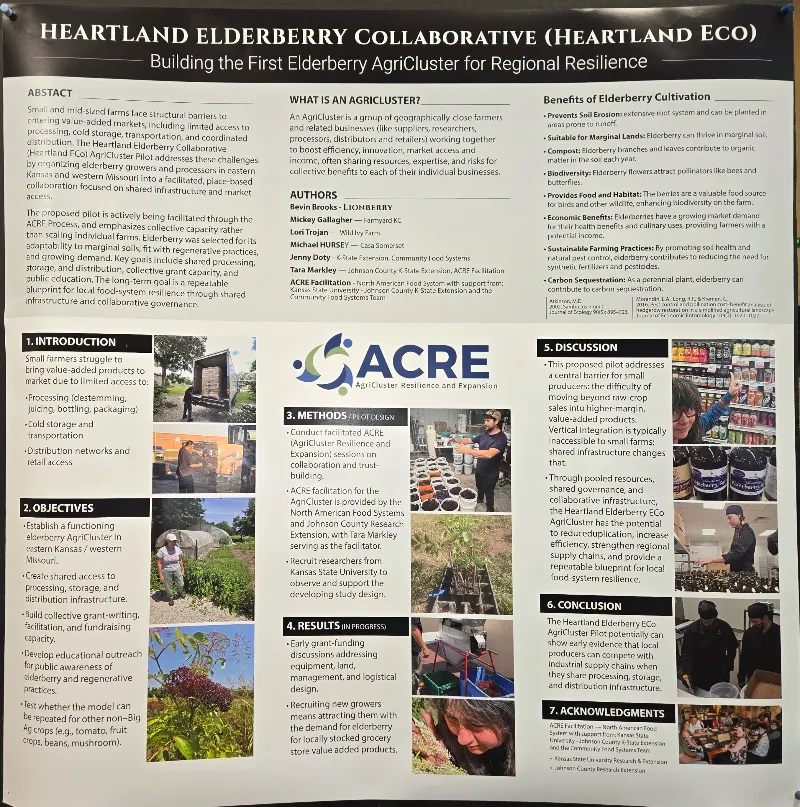


Farmer Mickey Gallagher, the “Johnny Elderberry Seed” of KC Farmyard, joined by Bevin Brooks of LIONBERRY, are the co-chairs of the American Heartland Elderberry Collaborative… AHECo.
They have been touring member farms of their AgriCluster and helping to cultivate the American elderberry across Kansas and Missouri.
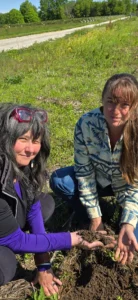
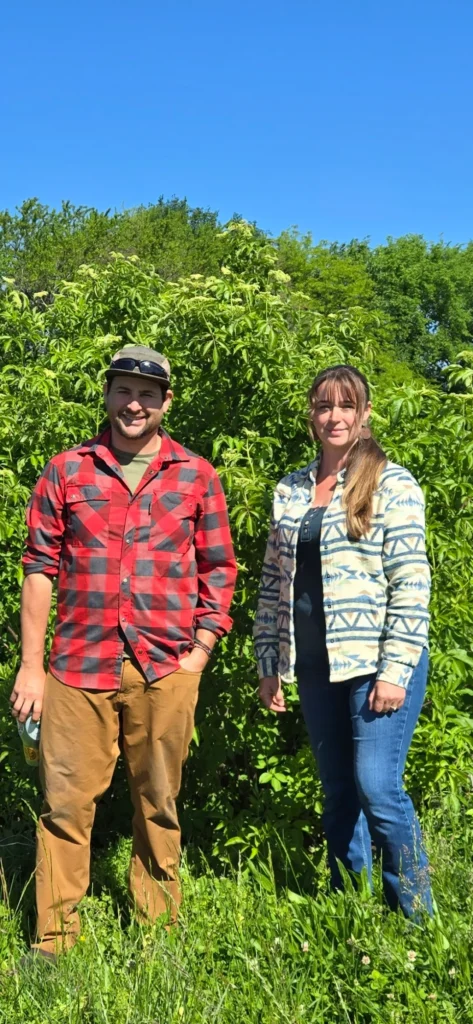
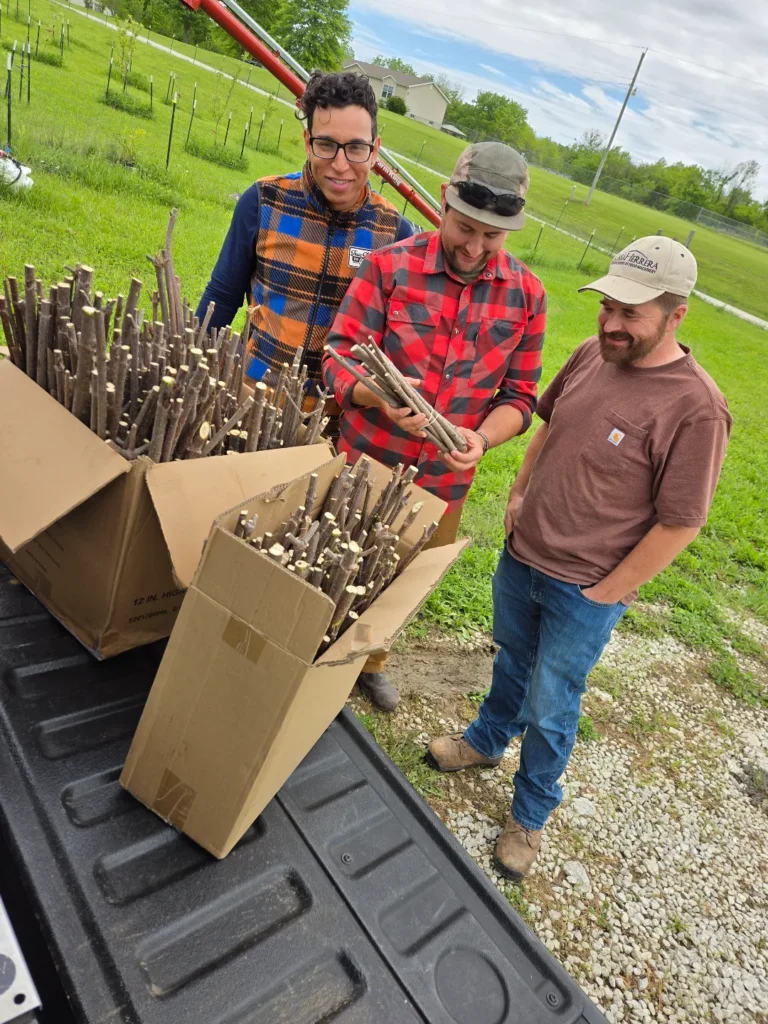
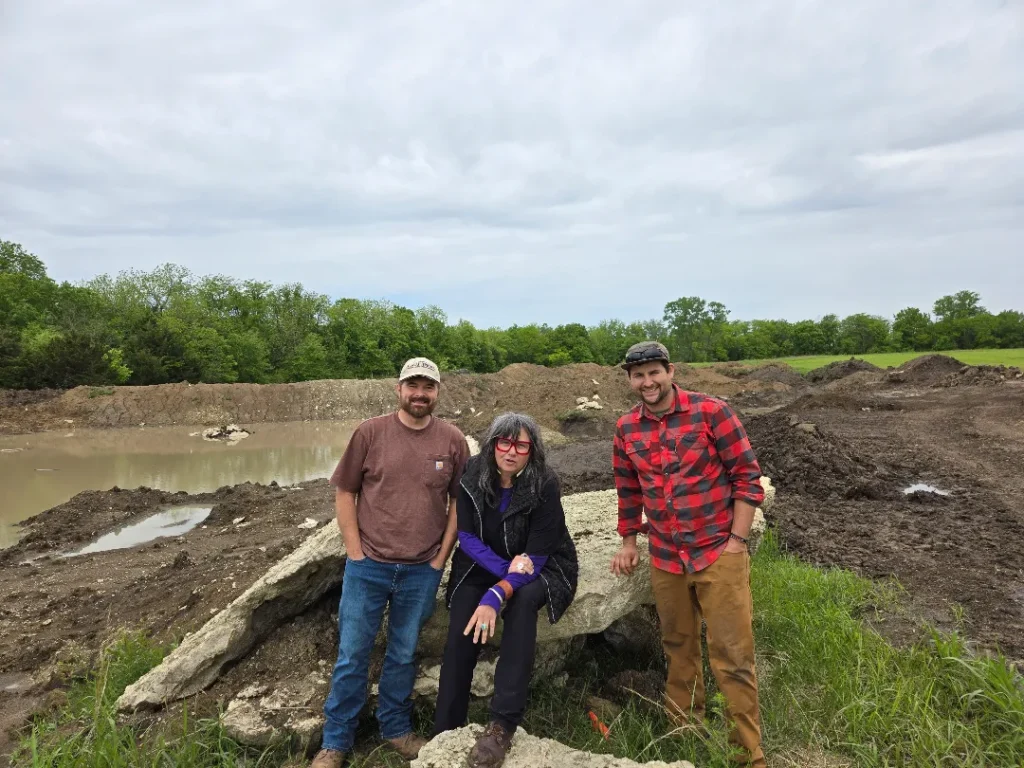
This week the co-chairs visited Jeremy Fyler of Fyler Farms and helped him start his elderberry orchard. Jeremy operates a flour mill and has an impressive start to a fruit orchard. The co-chairs brought him 500 cuttings that Jeremy purchased from Michael Hursey of Casa Somerset, a fellow AgriCluster member.
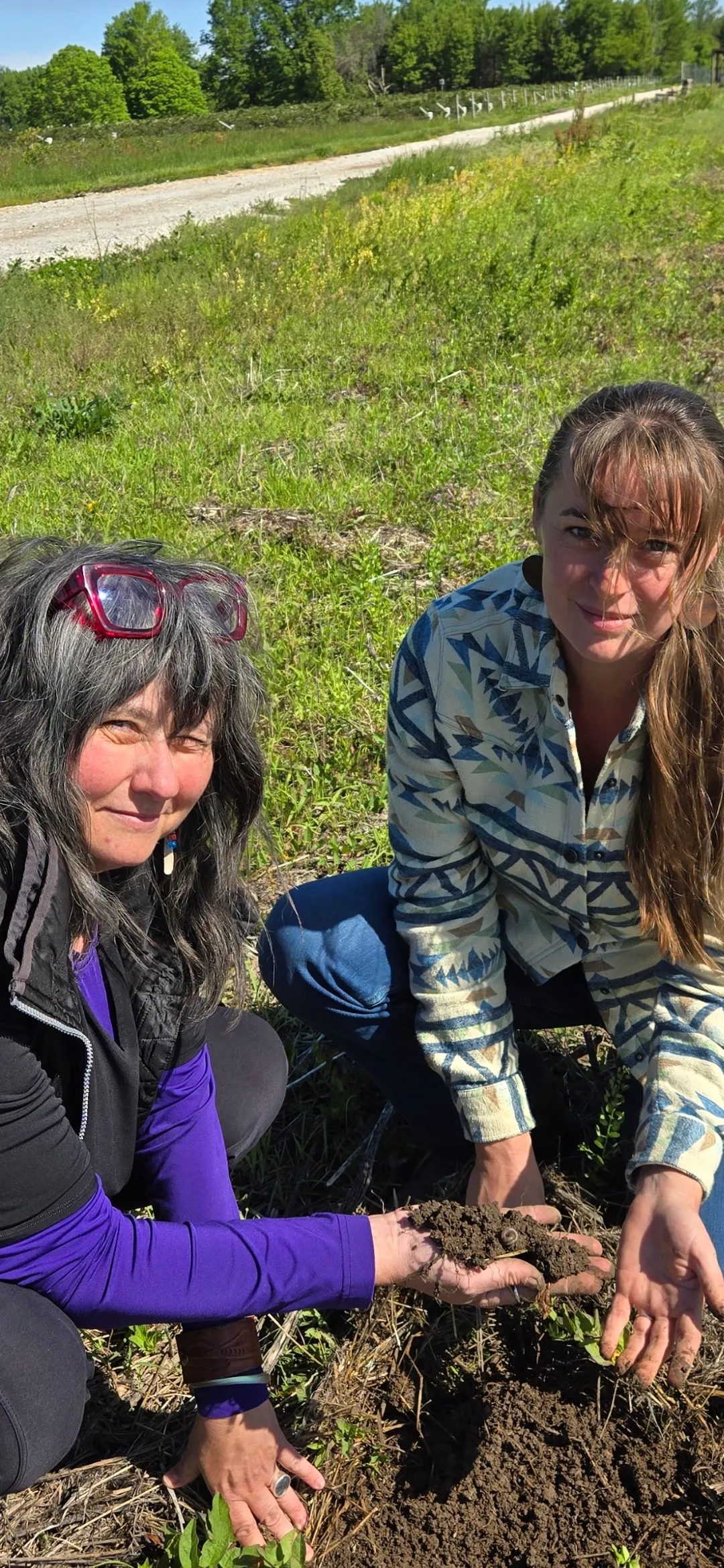
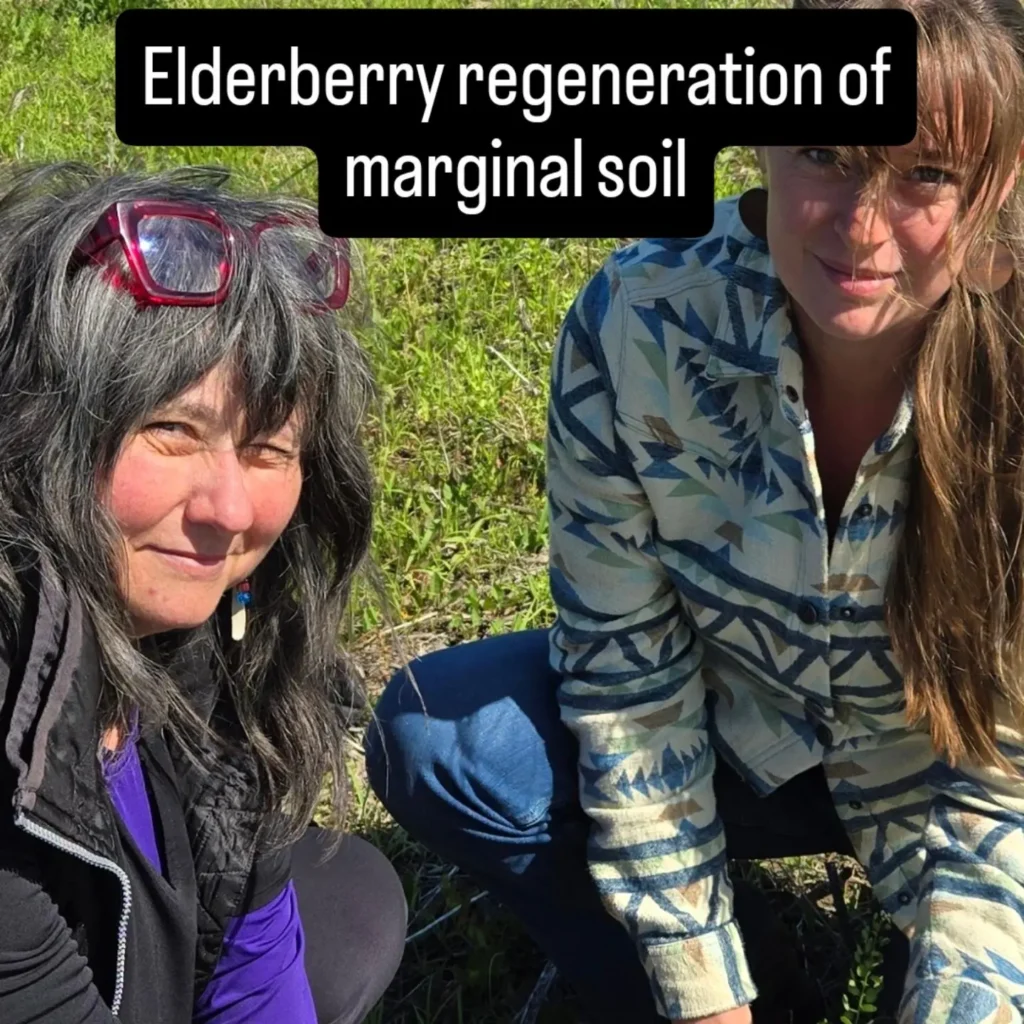
The newly formed elderberry AgriCluster… American Heartland Elderberry Collaborative… also spent a long day of farm visiting with fellow AgriCluster member Cassandra Nichole at Colonial Gardens, Good Oak LLC, and Powell Gardens. The group discussed elderberry and its role in regenerative farming and how it can help restore marginal soil.
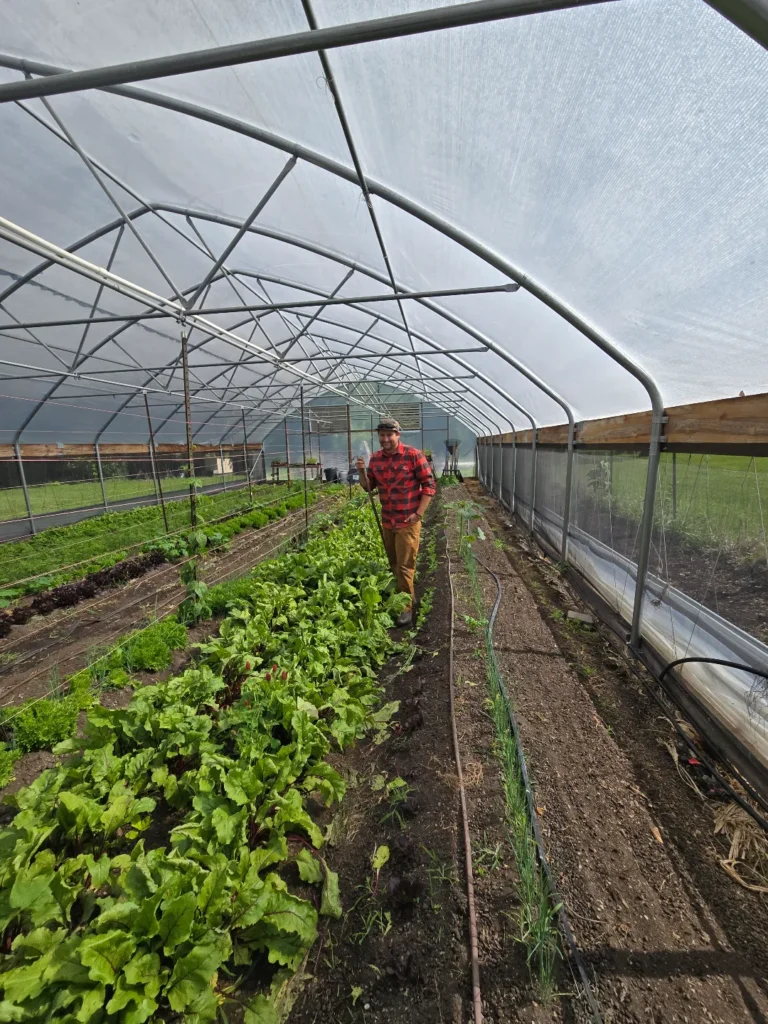
Mickey Gallagher is the in-house farmer at Casa Somerset Elderberry Orchard, and he also runs KC Farmyard, where he grows impressive ginger and specialty crops.
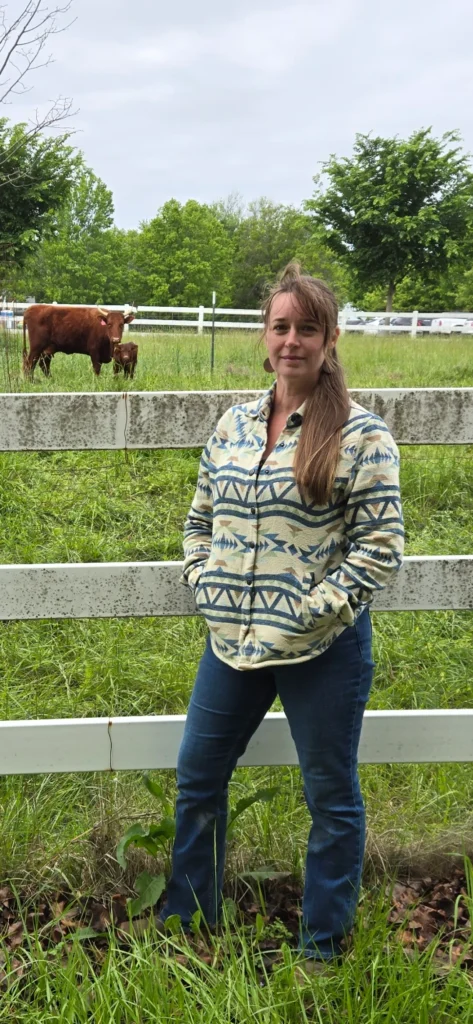
Later that evening, AgriCluster members crossed back into Kansas from Missouri to attend a lecture on fruit farm agritourism at Gieringer’s Family Orchard & Berry Farm. There, AgriCluster core member Lori Trojan of Wild Ivy Herb Farm, AgriCluster members Siri and Robert Leonard, and new member Tom Buller of Kansas Rural Center learned and discussed soil health and specialty crops.
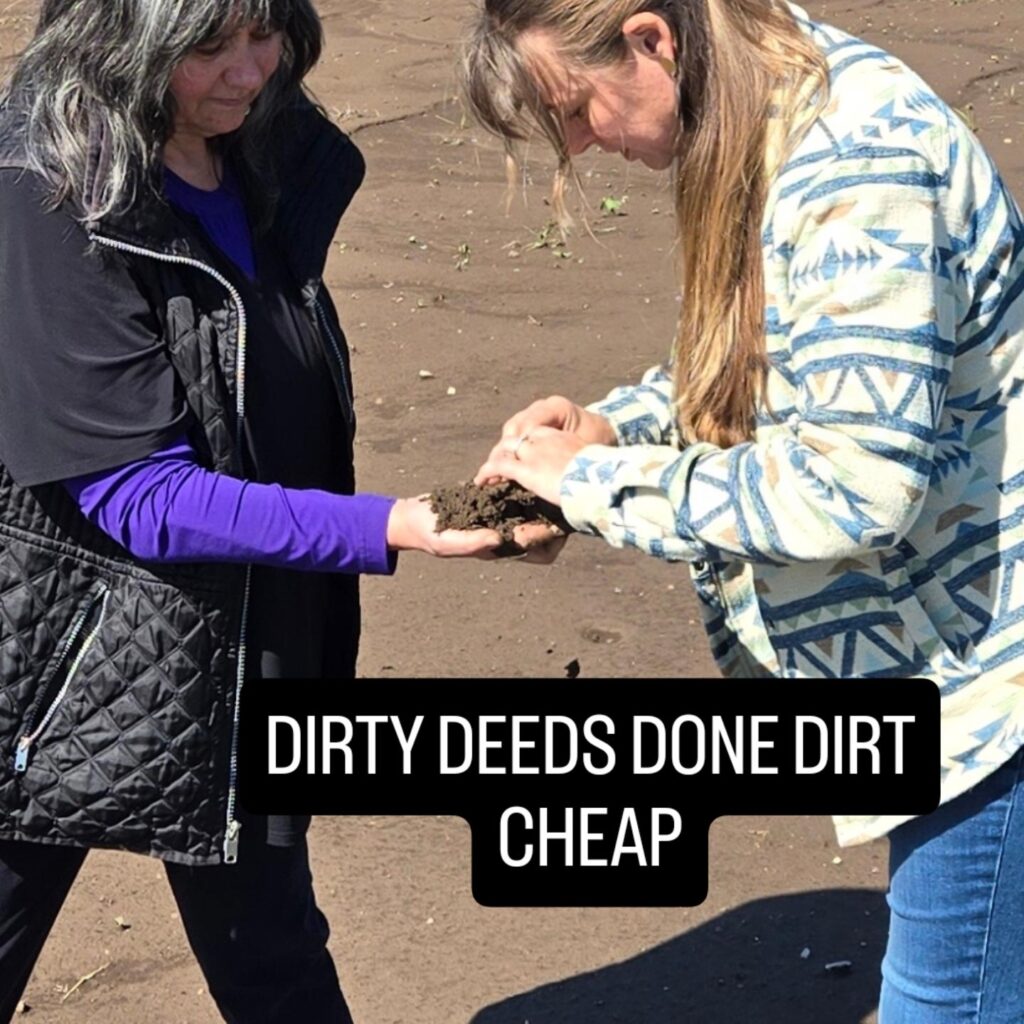
DIRTY DEEDS DONE DIRT CHEAP
Why Elderberry?
- Why Elderberry?
- Performs well on marginal soils
- Prevents soil erosion
- Integrates with soil-health and regenerative practices
- Supports perennial hedgerows and diversified systems
- Brings in the pollinators
- Strengthens the ecosystem
- Sequesters carbon
- Increases mycorrhizal activity
- Stabilizes poor soil
- Is a perennial that can be cut down each year and composted
- Aligns with growing consumer demand for regionally produced products
- Disrupts the global supply chain
- Food is medicine
- Follow co-chairs Mickey and Bevin in a day in the life of stewarding elderberry with DIRTY DEEDS DONE DIRT CHEAP.
PART 1
We start the day in Kansas at Casa Somerset, where we pick up elderberry cuttings from Michael Hursey to deliver to a farm in Missouri.
PART 2
Back in Kansas, Mickey shows us his high tunnel at KC Farmyard and the Casa Somerset elderberry, for which Mickey is the caretaker.
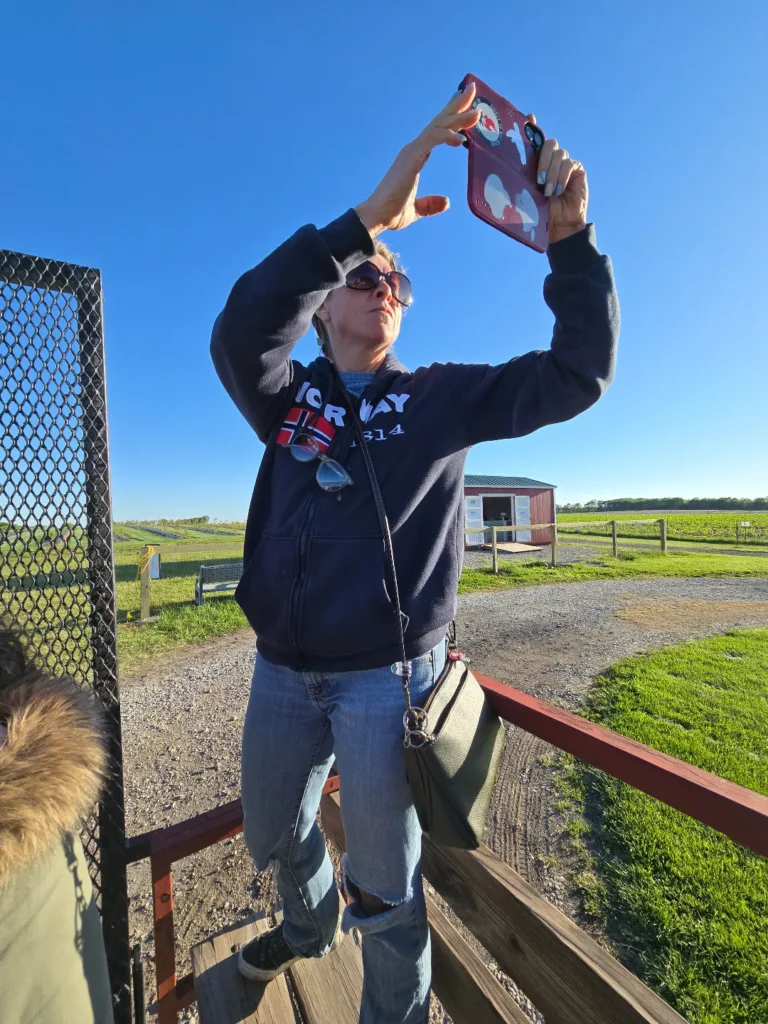
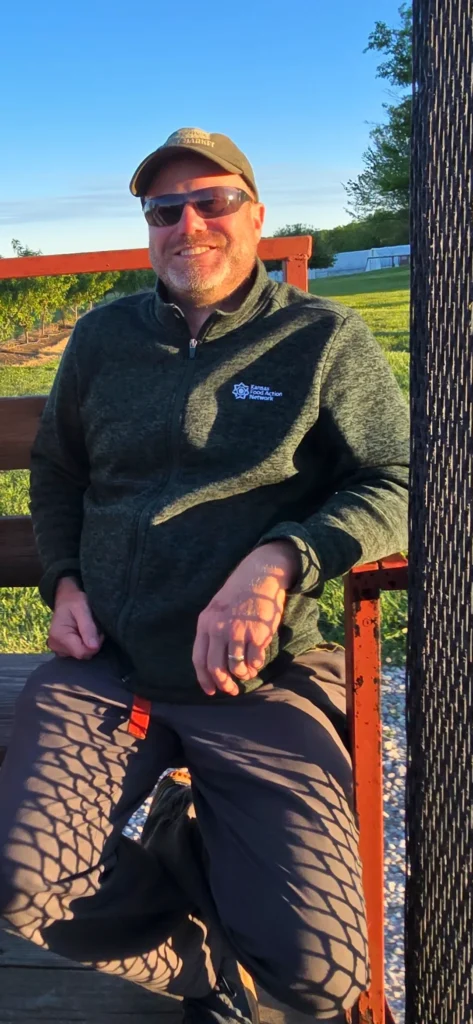
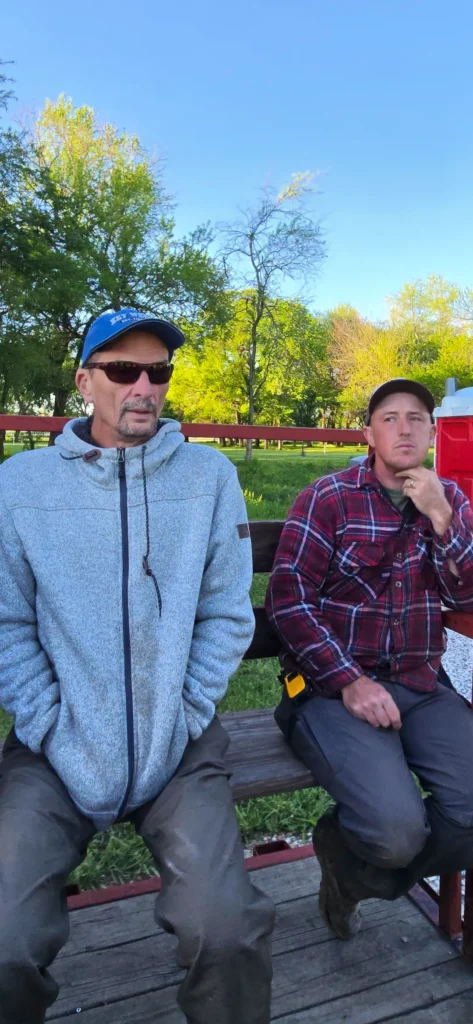
Next to Robert is a farmer we are wooing… Jacob of JET Farms. GOT ELDERBERRY YET?
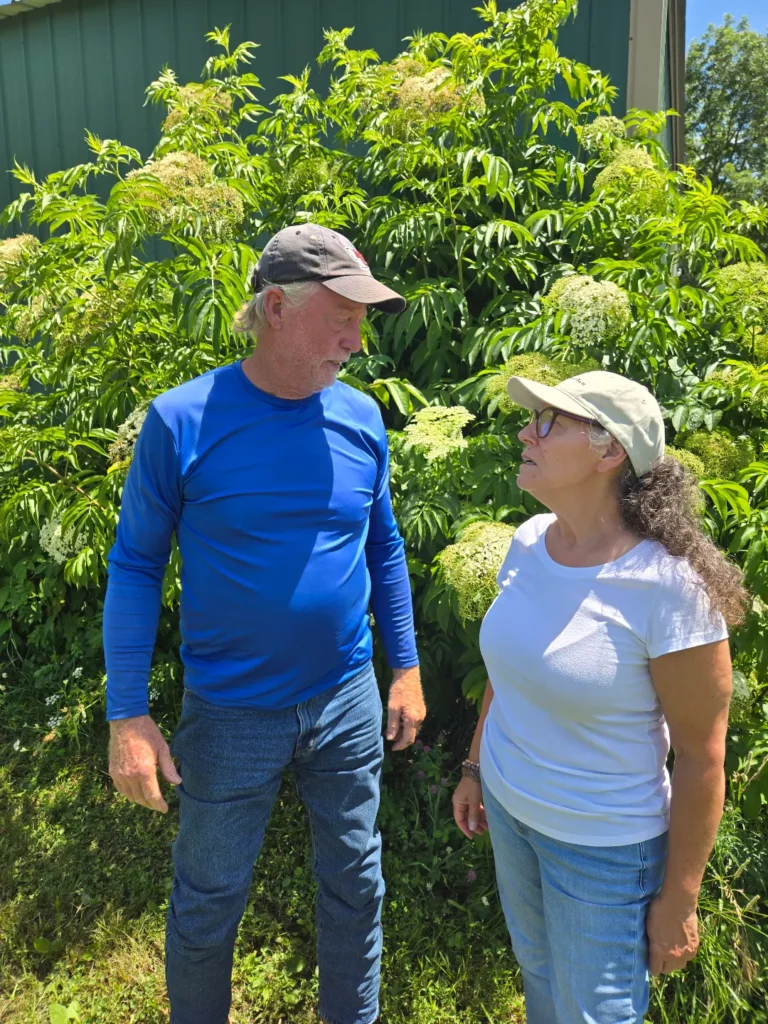
Stay tuned as the co-chairs visit more members of the elderberry AgriCluster American Heartland Elderberry Collaborative.