Dirty Deeds Done Dirt Cheap… American Heartland Elderberry Collaborative Hits the Road

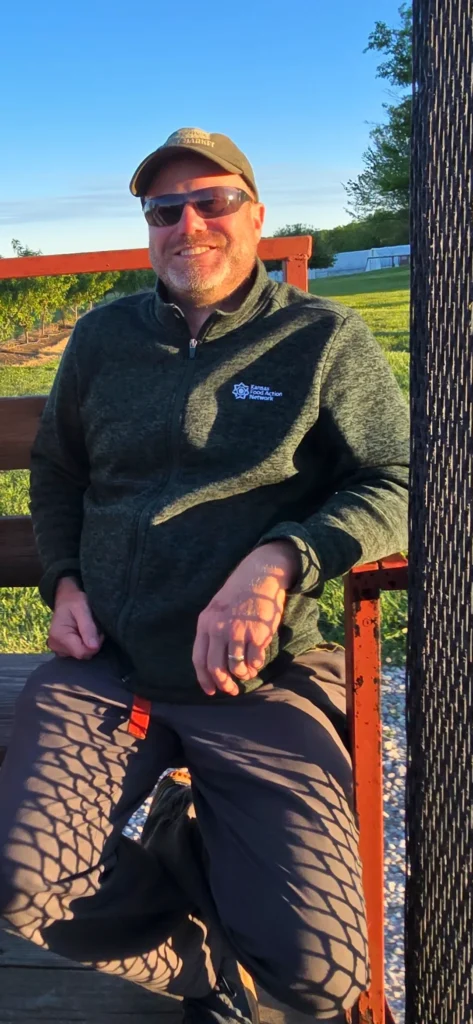
Farmer Mickey Gallagher, the “Johnny Elderberry Seed” of KC Farmyard, joined by Bevin Brooks of LIONBERRY, are the co-chairs of the American Heartland Elderberry Collaborative… AHECo.

They have been touring member farms of their AgriCluster and helping to cultivate the American elderberry across Kansas and Missouri.

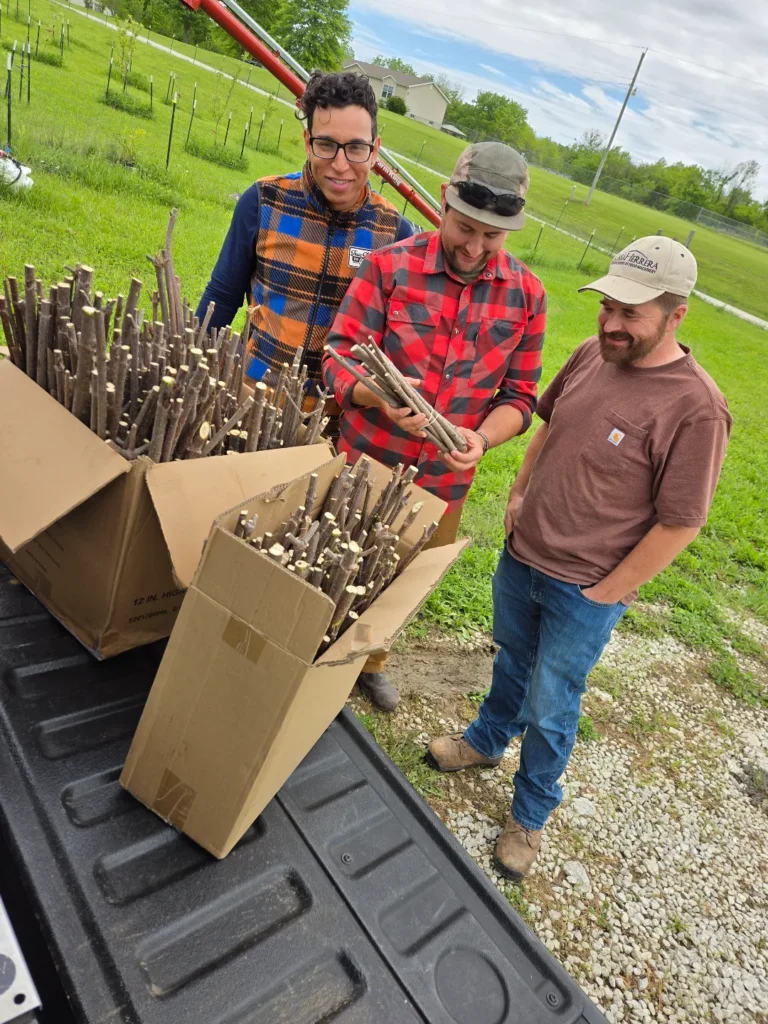
This week the co-chairs visited Jeremy Fyler of Fyler Farms and helped him start his elderberry orchard. Jeremy operates a flour mill and has an impressive start to a fruit orchard. The co-chairs brought him 500 cuttings that Jeremy purchased from Michael Hursey of Casa Somerset, a fellow AgriCluster member.
The newly formed elderberry AgriCluster… American Heartland Elderberry Collaborative… also spent a long day of farm visiting with fellow AgriCluster member Cassandra Nichole at Colonial Gardens, Good Oak LLC, and Powell Gardens. The group discussed elderberry and its role in regenerative farming and how it can help restore marginal soil.
Mickey Gallagher is the in-house farmer at Casa Somerset Elderberry Orchard, and he also runs KC Farmyard, where he grows impressive ginger and specialty crops.
Later that evening, AgriCluster members crossed back into Kansas from Missouri to attend a lecture on fruit farm agritourism at Gieringer’s Family Orchard & Berry Farm. There, AgriCluster core member Lori Trojan of Wild Ivy Herb Farm, AgriCluster members Siri and Robert Leonard, and new member Tom Buller of Kansas Rural Center learned and discussed soil health and specialty crops.


DIRTY DEEDS DONE DIRT CHEAP

Why Elderberry?

  • Why Elderberry?
  • Performs well on marginal soils
  • Prevents soil erosion
  • Integrates with soil-health and regenerative practices
  • Supports perennial hedgerows and diversified systems
  • Brings in the pollinators
  • Strengthens the ecosystem
  • Sequesters carbon
  • Increases mycorrhizal activity
  • Stabilizes poor soil
  • Is a perennial that can be cut down each year and composted
  • Aligns with growing consumer demand for regionally produced products
  • Disrupts the global supply chain
  • Food is medicine
  • Follow co-chairs Mickey and Bevin in a day in the life of stewarding elderberry with DIRTY DEEDS DONE DIRT CHEAP.

PART 1

We start the day in Kansas at Casa Somerset, where we pick up elderberry cuttings from Michael Hursey to deliver to a farm in Missouri.
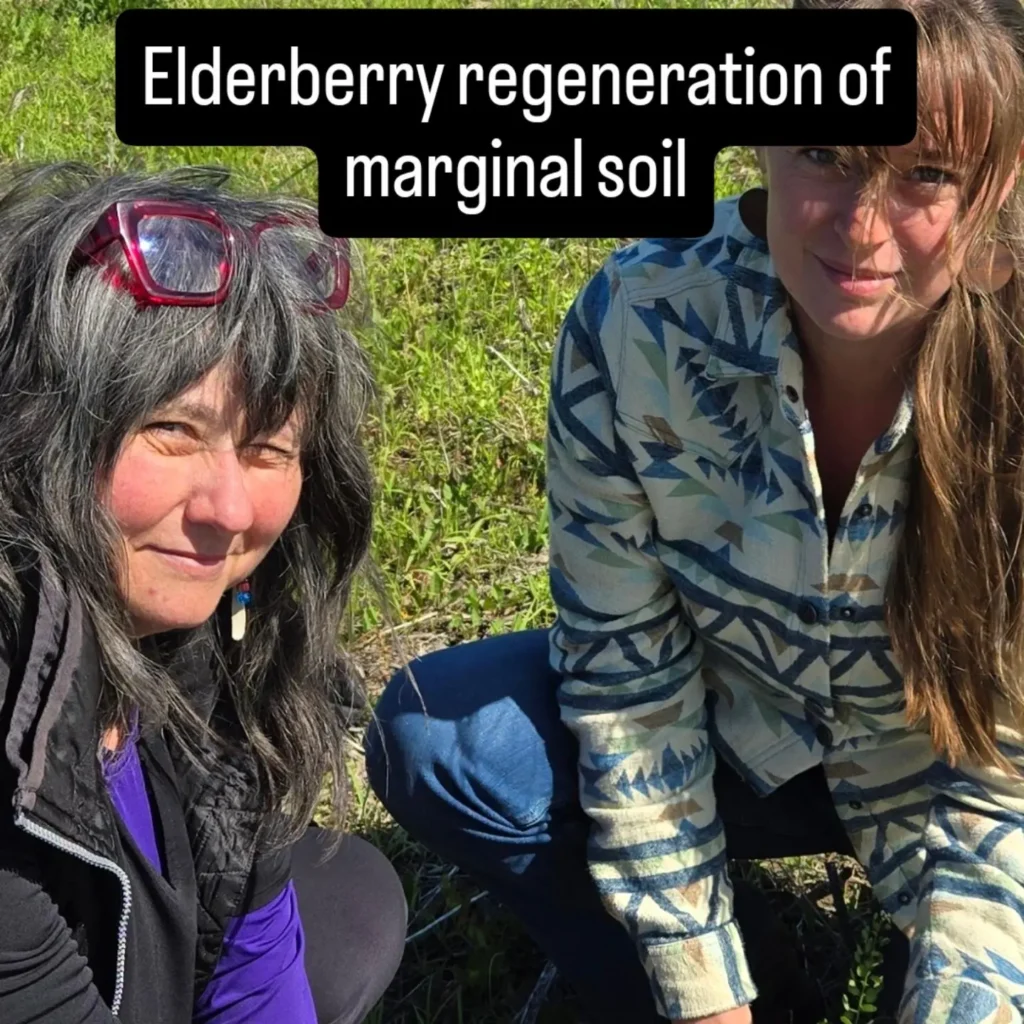
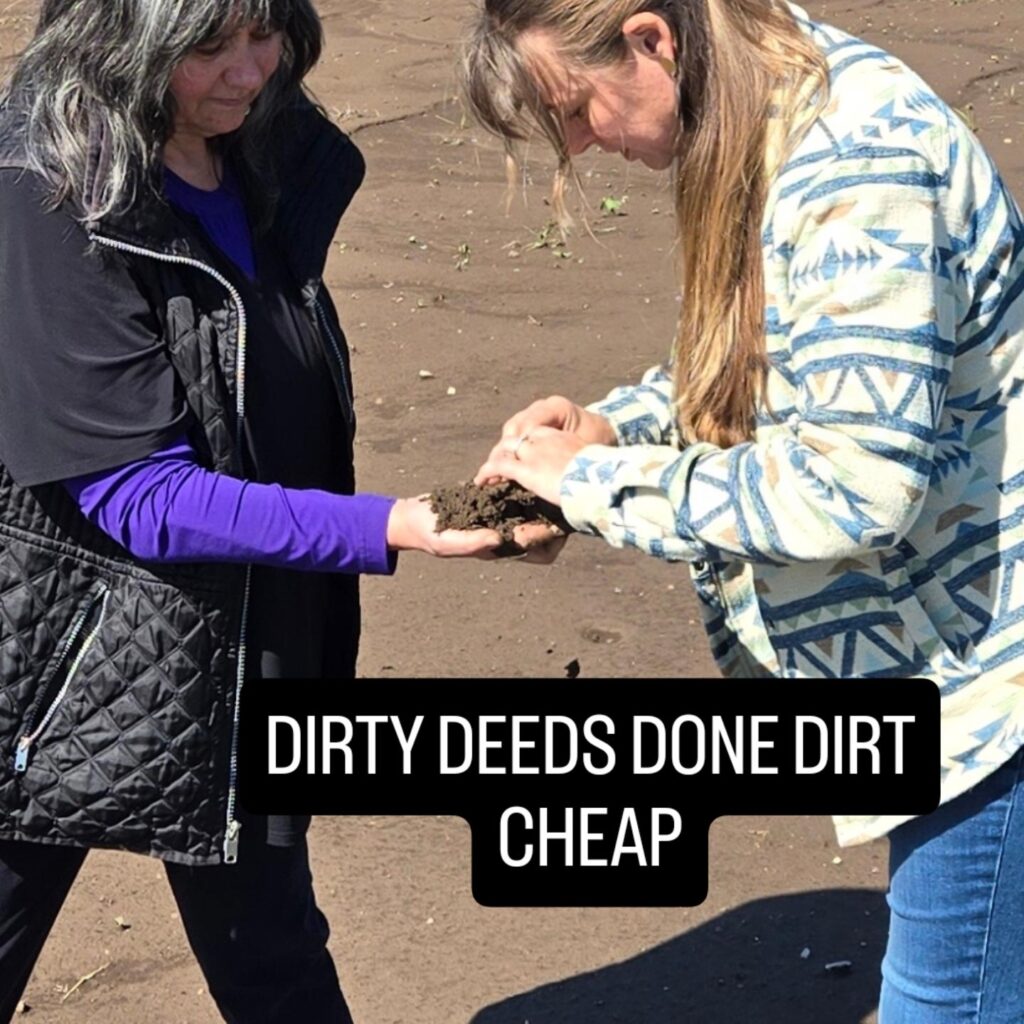
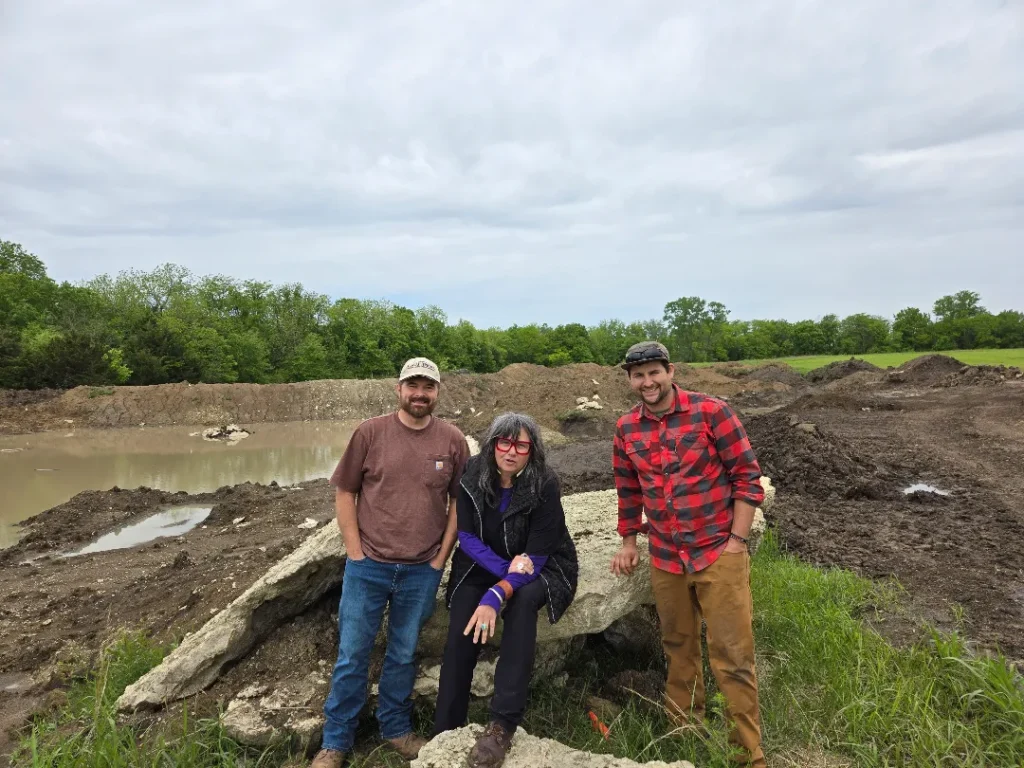
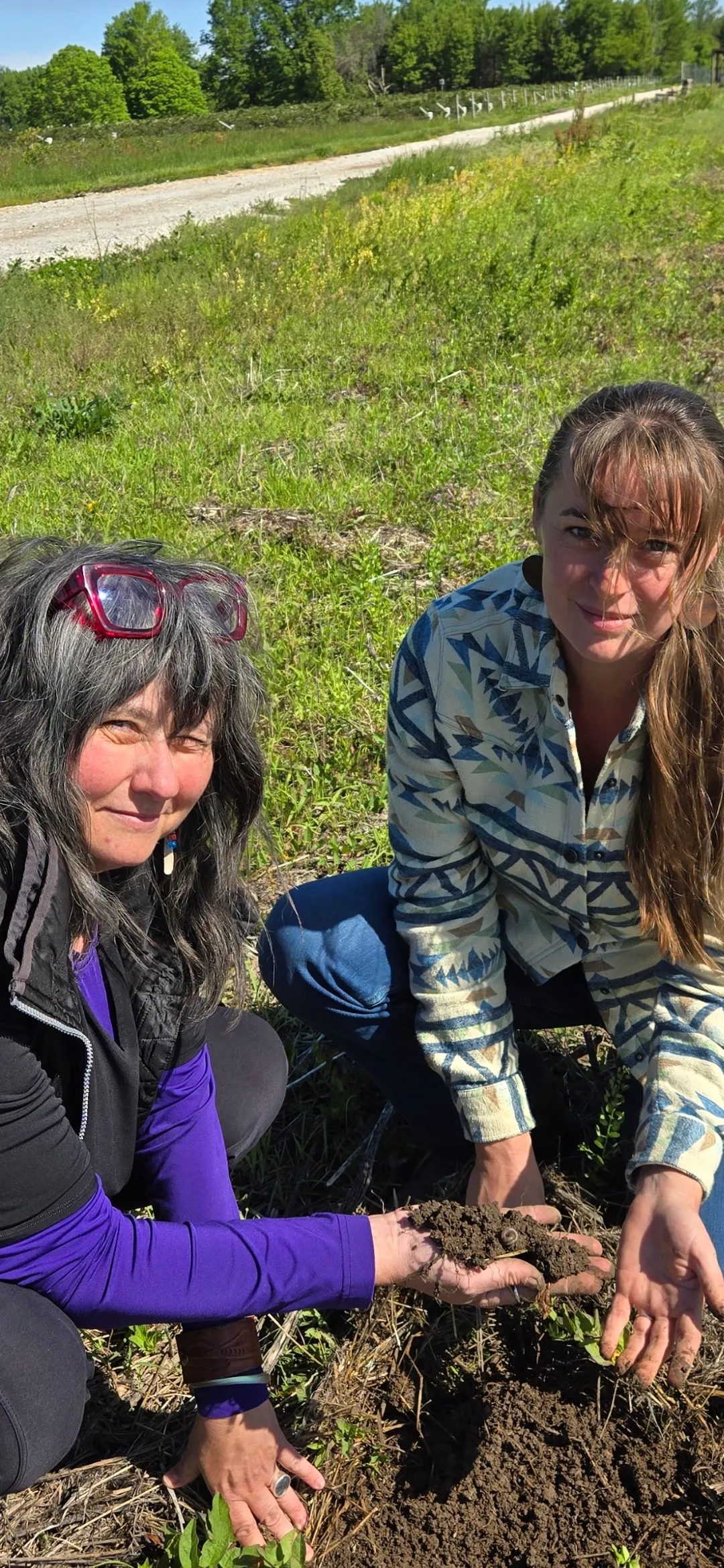
At Colonial Gardens, Cassandra and Bevin compare good soil… rich with mycorrhizal life… to soil that was subjected to unknown pesticide chemicals five or six years ago. We discuss the possibilities of elderberry in the marginal soil in Missouri.
Elderberry may be the answer. DIRTY DEEDS DONE DIRT CHEAP.
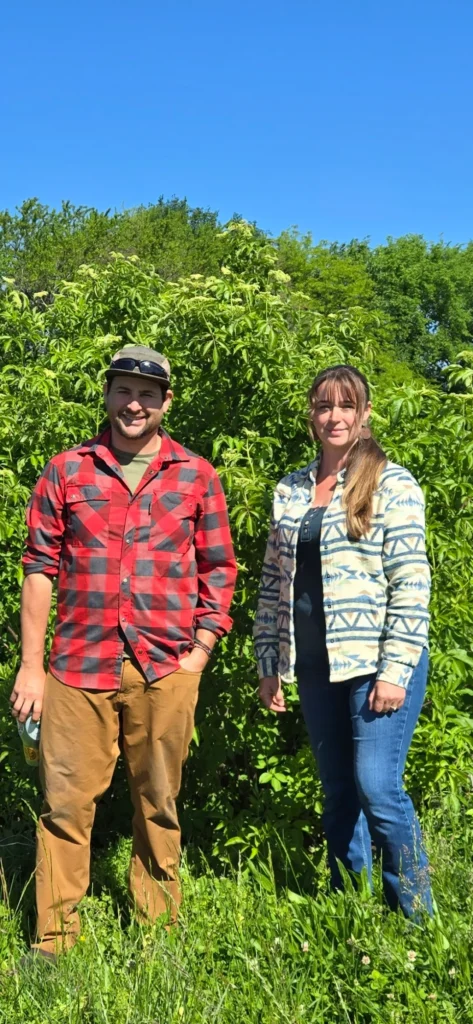
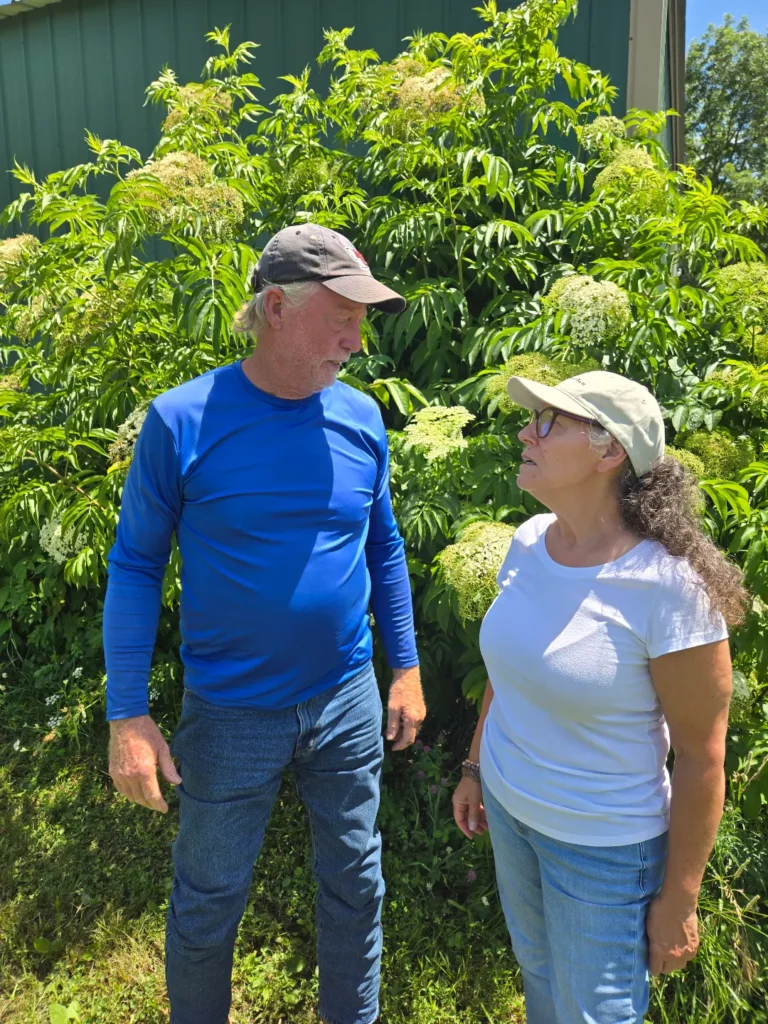
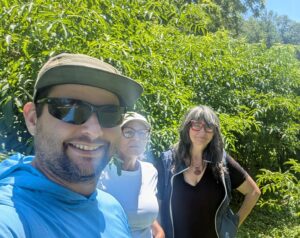
Mickey and Cassandra in the Elderberry at Colonial Gardens newly acquired by Powell Gardens.
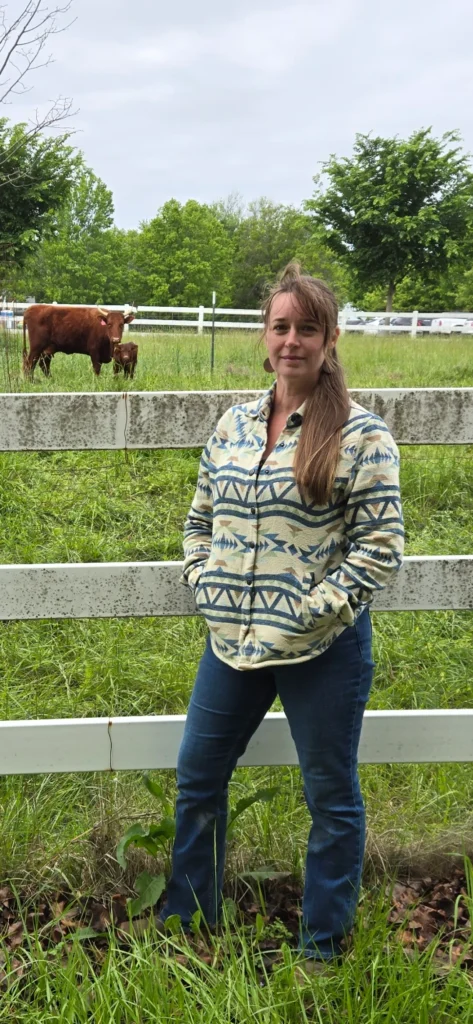
Cassandra, lifelong feral female farmer, is a member of the American Heartland Elderberry Collaborative and focuses on our future infrastructure. She also runs Good Oak LLC, where they have more elderberry and her famous critters.
Later that day, AHECo co-chairs Mickey and Bevin made a farm visit with Jeremy of Fyler Farms, who is adding American elderberry (Bob Gordon variety) to his orchard. These 500 cuttings are from Casa Somerset’s elderberry orchard. More DIRTY DEEDS DONE DIRT CHEAP as we transport elderberry cuttings across state lines.
Jeremy has a lot of new projects on his farm and lots of room for elderberry to help with his Missouri soil health.


PART 2

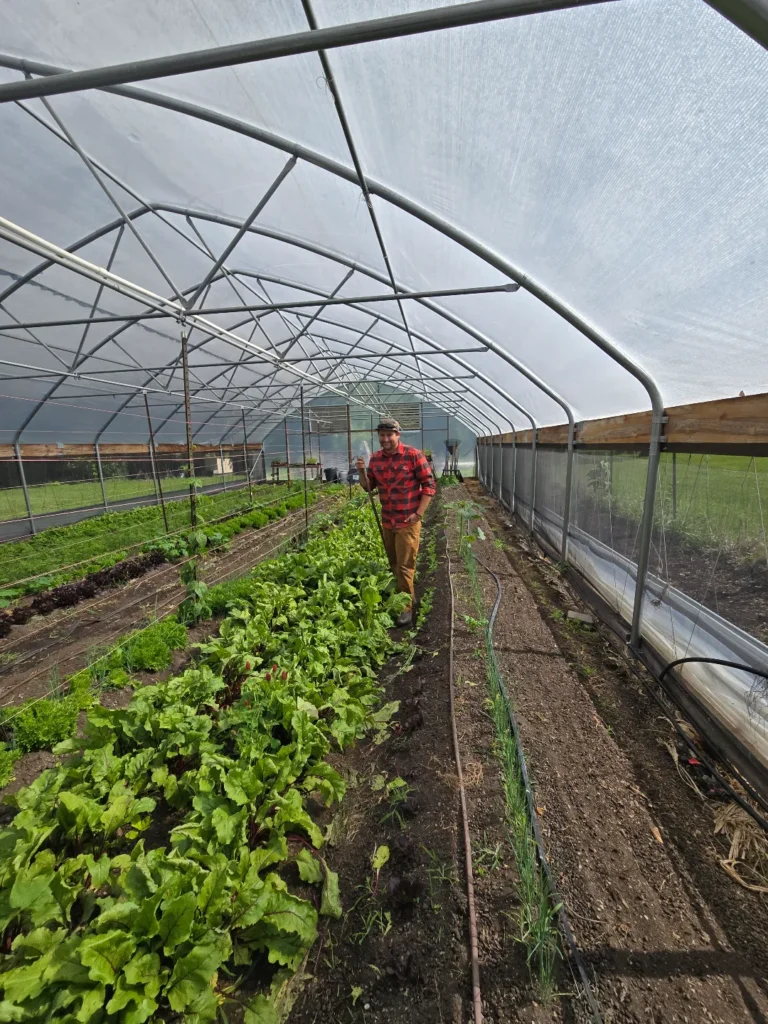
Back in Kansas, Mickey shows us his high tunnel at KC Farmyard and the Casa Somerset elderberry, for which Mickey is the caretaker.
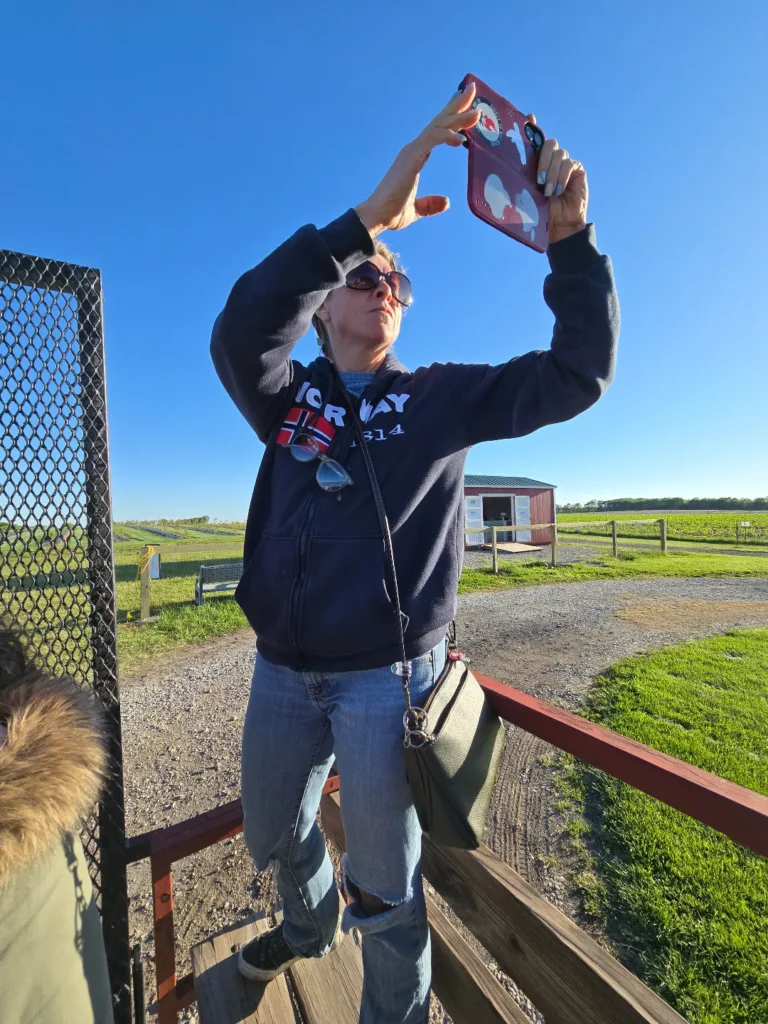
In the evening we joined more members of the AgriCluster American Heartland Elderberry Collaborative to learn about fruit and specialty crops on a tour of Gieringer’s Family Orchard & Berry Farm.
Siri Leonard, a member of the American Heartland Elderberry Collaborative, works on the Growers Subcommittee shaping good elderberry growing processes, standards, and stewardship.
Here, Tom Buller is enjoying the special tour around the farm. We are thankful to have Tom jump in to help lead up our structural framework. We are lucky to have his experience in building the business bones and legal frame-raising of a new AgriCluster. Tom has elderberry on his land and is thinking about more.
Above is Robert Leonard, who has been with the AgriCluster since the early days. He and his wife Siri have their elderberry in the ground and are adding more. He is involved with plans to strengthen the market for elderberry.
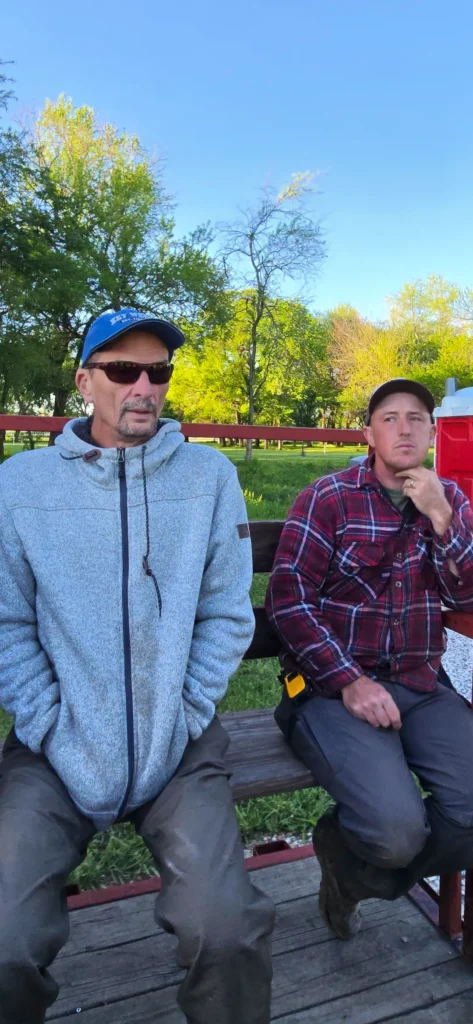
Next to Robert is a farmer we are wooing… Jacob of JET Farms. GOT ELDERBERRY YET?
As it turned dark, we dropped Lori Trojan, our elderberry storyteller and core member, off at her Wild Ivy Herb Farm. On the next farm visit we can take a look at Lori’s elderberry and Mark Allison’s (seen below), who has elderberry at his Fossil Creek Winery. Mark also has the agritourism bus, The Miami Trolley.

Stay tuned as the co-chairs visit more members of the elderberry AgriCluster American Heartland Elderberry Collaborative.

Facebook
X
LinkedIn

Fortifying the Heartland: My Christmas Wish for Hy-Vee.

Lionberry 's Weekly Delusion and Re-illusion Update.

This week’s delusion is pretending our grocery stores don’t have a weak point.

This week’s re-illusion is remembering that strength comes from building on what already works, not acting like we’re starting from scratch.

Hy-Vee does a really good job bringing in local barbecue sauces, jams, honey, and other value-added foods from the Heartland.

We’re not starting from zero.

But we are starting from small.

So I handed Santa a LionBerry and gave him my Christmas list:

A fortified Hy-Vee — one that expands the Heartland section that already exists into a full, accessible, stocked-every-day aisle for local foods.

Not to replace the global or national imports like Florida oranges, California almonds, Mexico avocados, pineapple juice from Thailand, or coastal produce —

but to stand beside them, so the region isn’t left vulnerable the next time anything shakes the system:

  • fuel shortages
  • war
  • trucking strikes
  • geopolitics
  • water shortages
  • drought or dust-bowl conditions
  • port disruptions
  • cyber hits
  • natural disasters

Any one of these can break a supply chain.

A fortified regional shelf — built from the farms around Kansas, Missouri, and Nebraska — keeps us fed.

The World Cup is coming to Kansas City.

Soccer tourists from Germany, Brazil, Japan, everywhere — living in Airbnbs for three to six weeks, shopping at Hy-Vee for everything from breakfast to body soap.

If we went to Germany, we’d want Wienerschnitzel.

If we went to Brazil, we’d want feijoada.

If we went to Japan, we’d want ramen or sushi that actually tastes like Japan.

So when they come to the Heartland, they don’t want a New York hot dog or a California cheeseburger.

They want us — the real Midwest.

What do we grow and make here?

  • local barbecue sauces
  • local fruit like blueberries
  • corn tortillas, tomato sauces, and beans
  • wheat pastas and breads
  • value-added soaps made from beef tallow
  • local meat, dairy, and eggs
  • elderberry drinks

And soccer tourists staying in AirBnB’s need actual essentials:

  • dish soap
  • cleaning agents
  • body soap and hygiene products
  • breakfast foods
  • snacks
  • drinks
  • basics
  • dinners

This is exactly why a stronger Heartland aisle matters — not just for crisis, but for culture, tourism, and everyday life.

This week’s delusion is pretending our grocery stores don’t have a weak point.
This week’s re-illusion is remembering that strength comes from building on what already works, not acting like we’re starting from scratch.

Hy-Vee does a really good job bringing in local barbecue sauces, jams, honey, and other value-added foods from the Heartland.
We’re not starting from zero.
But we are starting from small.

So I handed Santa a LionBerry and gave him my Christmas list:

A fortified Hy-Vee — one that expands the Heartland section that already exists into a full, accessible, stocked-every-day aisle for local foods.

Not to replace the global or national imports like Florida oranges, California almonds, Mexico avocados, pineapple juice from Thailand, or coastal produce —
but to stand beside them, so the region isn’t left vulnerable the next time anything shakes the system:

  • fuel shortages
  • war
  • trucking strikes
  • geopolitics
  • water shortages
  • drought or dust-bowl conditions
  • port disruptions
  • cyber hits
  • natural disasters

Any one of these can break a supply chain.
A fortified regional shelf — built from the farms around Kansas, Missouri, and Nebraska — keeps us fed.

The World Cup is coming to Kansas City.
Soccer tourists from Germany, Brazil, Japan, everywhere — living in Airbnbs for three to six weeks, shopping at Hy-Vee for everything from breakfast to body soap.

If we went to Germany, we’d want Wienerschnitzel.
If we went to Brazil, we’d want feijoada.
If we went to Japan, we’d want ramen or sushi that actually tastes like Japan.

So when they come to the Heartland, they don’t want a New York hot dog or a California cheeseburger.
They want us — the real Midwest.

What do we grow and make here?

  • local barbecue sauces
  • local fruit like blueberries
  • corn tortillas, tomato sauces, and beans
  • wheat pastas and breads
  • value-added soaps made from beef tallow
  • local meat, dairy, and eggs
  • elderberry drinks

And soccer tourists staying in Airbnbs need actual essentials:

  • dish soap
  • cleaning agents
  • body soap and hygiene products
  • breakfast foods
  • snacks
  • drinks
  • basics
  • dinners

This is exactly why a stronger Heartland aisle matters — not just for crisis, but for culture, tourism, and everyday life.

A shared warehouse, a shared distributor, and a unified block of local makers would let regional foods move with the same efficiency as national brands — while staying rooted right here.

Tourists will buy it.
Locals will keep it.
And if anything ever shakes the world, a fortified Hy-Vee keeps the Heartland standing.

That’s what I told Santa.
That’s my wish this year.
And that’s exactly what LionBerry is built to help do — bottle by bottle, aisle by aisle.